Best UGC platforms for creators to find paid campaigns
Ranked roundup of the best UGC platforms where paid brand briefs actually get posted — rated by payout quality and campaign frequency in 2026.

I spent three weeks applying to brand deals through cold DMs before someone told me the platforms existed. Three weeks of writing personalized pitches into a void, getting ignored, wondering if I was doing something wrong. Then I signed up for two UGC marketplaces, and within four days I had my first paid campaign brief sitting in my inbox.
The platforms are where the work actually is. Brands don't want to manage a hundred cold DM inboxes — they post briefs, review portfolios, and pick creators through tools built for exactly that. If you're not on the right ones, you're fishing without a rod.
This is a ranked breakdown of the best UGC platforms for creators right now, based on payout quality and how consistently new campaigns drop. Not a copy-paste list from 2022. What's actually working in 2026.
What separates a good UGC platform from a waste of time
Two things matter: payout quality and campaign frequency. A platform with 200 active briefs paying $35 a video is not a good platform. A platform with 20 briefs paying $300 and adding 15 new ones each week? That's worth your time.
You also want to know how selective the vetting is. More selective platforms pay more and have better brands — but they reject most applicants. Beginner-friendly platforms get you moving faster, but the ceiling is lower.
The platforms below are ranked roughly by value to a working creator. I'll flag who each one suits best.
The best dedicated UGC marketplaces
Billo — highest campaign volume, period
Billo is the platform I'd tell every new UGC creator to join first. The campaign volume is unmatched — on any given day there are 50–100+ active briefs, across categories from skincare to pet products to SaaS. Brands ship you the product, you film the video, you get paid.
Payouts range from $50 to $200 per video, occasionally higher for premium brands asking for multiple deliverables. It's not the highest-paying platform on this list, but the frequency of work makes the math work. A solid Billo creator doing 8–12 videos a month is pulling $600–$1,500 before they've landed a single direct deal.
The application process is fairly straightforward. You submit a sample video and some basic profile info. Once approved, you browse briefs and apply to the ones that fit. Turnaround is usually 7–10 days from acceptance to payment.
Best for: Beginners building their first paid reel of experience, and experienced creators who want consistent volume alongside their higher-paying work.
Insense — better brands, better money
Insense is a step up in both brand quality and payout. The DTC and Shopify brand side of Insense is strong — you'll see names you recognize. Campaigns regularly pay $150–$500 per deliverable, and some retainer deals go well above that.
The tradeoff: Insense is more selective. Your UGC portfolio needs to be solid before you apply. Brands on this platform are paying more, so they're also pickier. If your sample work looks like it was shot in bad lighting with no hook, you won't get accepted to the good campaigns.
What I like about Insense is the brief quality. They're detailed, brands communicate clearly, and the platform has a real messaging layer so you can ask questions before committing. Fewer mystery campaigns where you do the work and realize the brand had different expectations.
Best for: Creators who've done 10–20 paid campaigns and want to upgrade their client tier.
JoinBrands — genuinely beginner-friendly
JoinBrands is newer and leans heavily into the Amazon and DTC brand space. The application bar is lower than most — you don't need an existing portfolio to get accepted, which makes it one of the best entry points.
Payouts land between $50 and $200 per video. Not spectacular, but they're consistent, and many campaigns include free product on top of cash. For someone who hasn't done their first UGC campaign yet, getting paid $80 plus a free skincare set to make a 30-second video is a genuinely good deal.
Campaign frequency is solid and growing. The platform has been adding brands quickly, and because it skews toward Amazon sellers, the brief requirements tend to be more standardized — which means less back-and-forth and faster turnaround.
Best for: Absolute beginners who want cash in hand within their first 30 days.
Later Influence (formerly Trend.io) — premium and selective
Later Influence was built on the foundation of Trend.io, which had a reputation for quality. After the merger with Later and Mavrck, the creator network carried that forward. Application acceptance rates are low — somewhere around 10–20% — but creators who get in consistently access campaigns paying $200–$700+.
The brands here are established. Think mid-market consumer brands with real marketing budgets, not scrappy startups trying to get content for $40. The campaigns tend to have cleaner briefs and more professional brand contacts.
If you get rejected on first application, keep going. Improve your work, reapply in 90 days. The platform is genuinely worth it once you're in.
Best for: Experienced creators who want premium brand exposure and higher individual payouts.
Cohley — strong for photo + video combos
Most UGC platforms are video-first. Cohley is one of the better options if you also produce still photography or lifestyle images — they run campaigns for both, and brands often want a bundle of 3–5 images plus a short video.
Per-campaign payouts are on par with Billo ($75–$250 range), but the licensing component can add value. Some Cohley campaigns pay a usage fee on top of the creation fee, which other platforms rarely do. Read the brief carefully — licensed deals are worth negotiating up.
Best for: Creators who shoot both photo and video and want to charge for content rights.
Minisocial — built for micro-creators
Minisocial works differently. Instead of applying per campaign, micro-creators (roughly 1k–50k followers) are matched with brands in batches. You get a product, you create content, the brand owns the rights.
Individual payouts are lower than the other platforms listed here — the model isn't designed for $200-a-video math. But for creators who are still building their portfolio, the steady stream of free product + modest pay + licensed work adds up. It's also genuinely good for building a UGC portfolio when you don't have much to show yet.
Best for: Early-stage creators with a small but engaged audience who want consistent content briefs.
Platforms that work differently
A few places that don't fit the "browse briefs, apply, get paid" model but are still worth knowing:
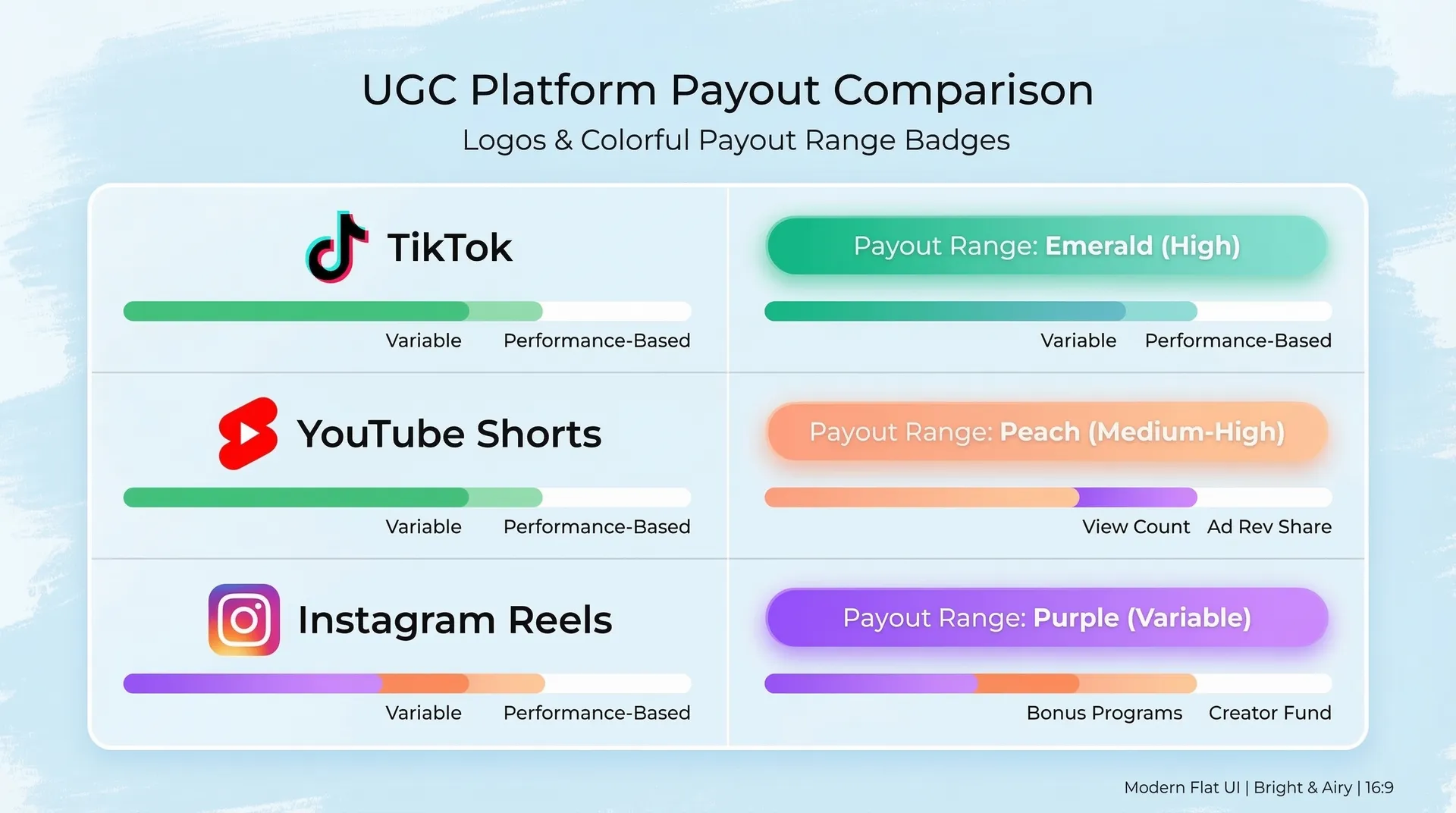
Fiverr and Upwork are general freelance marketplaces, not dedicated UGC platforms. Plenty of UGC gigs exist on both, but the pricing is usually worse — brands shopping for content on Fiverr are often looking for the cheapest option, which pushes rates down. That said, if you optimize your Fiverr profile well and target the right search terms, you can supplement income here without much extra effort.
Direct brand portals are something most people overlook. A lot of mid-size brands (think $20M–$200M revenue DTC companies) have their own creator programs that never get posted to external platforms. Elf Cosmetics, Duolingo, and dozens of Shopify brands run internal ambassador or UGC programs — you apply directly through their website. Higher payout potential, no platform taking a cut.
Instagram and TikTok creator marketplaces have gotten more useful. TikTok's Creator Marketplace connects brands directly with creators for Spark Ads content, which is effectively paid UGC. The payouts vary wildly, but the direct-to-brand connection is valuable.
How to actually get traction
Signing up for five platforms and submitting mediocre applications does nothing. You need one strong portfolio page, a sample video that shows you understand hooks and pacing (see our UGC video production guide for the fundamentals), and clean audio — because bad audio kills more applications than bad lighting ever will.
Once you're on two or three platforms, track your accept/reject ratio by brief type. If skincare brands keep picking you and tech brands keep ignoring you, lean into skincare. Specialize faster than you think you should. Brands on these platforms are looking for creators who feel native to their product category.
The full strategy for going from platform sign-up to consistent work is something I covered in detail in how to land UGC campaigns as a creator in 2026 — if you haven't read that yet, start there.
Quick-start stack: Sign up for Billo + JoinBrands this week to get your first briefs moving. Add Insense once you have 5–10 pieces of paid work in your portfolio. That's the progression that works.