Faceless UGC portfolio: build one without showing your face
Want to do UGC without showing your face? Build a faceless UGC portfolio using voiceover, hands-only, and b-roll formats brands actually pay for.

Most creators I talk to assume UGC means putting your face on camera. They put off getting started because they're camera-shy, or they have a day job they'd rather keep separate, or they just don't want to build a personal brand — they want to build a business. And they think not wanting to be on camera disqualifies them from the space entirely.
It doesn't.
Faceless UGC is a legitimate, growing format. Search interest has grown over 600% year over year. Brands buying content for ads care about one thing: does this creative convert? A crisp voiceover over product b-roll regularly outperforms a talking-head testimonial in certain categories. Hands-only unboxings pull strong engagement. Lifestyle b-roll with well-chosen audio consistently beats face-on-camera for wellness, food, home goods, and tech.
I've seen faceless creators charge $200–$400 per video and keep full client rosters year-round. The format works. What you need is a portfolio that proves it.
Why faceless UGC is a legitimate (and growing) format
The short version: brands don't run your face in their ads. They run your content.
When a DTC brand buys UGC, they're not signing a brand ambassador deal. They're purchasing footage — raw clips, edited shorts, or finished ad-ready videos — to drop into their paid social campaigns. Whether your face appears is largely irrelevant unless the specific brief calls for an on-camera testimonial.
And many briefs don't.
Think about the ads you scroll past on TikTok and Instagram. A surprising number of high-performing creatives are product close-ups, voiceover demos, aesthetic b-roll with text overlay, or hands-and-lifestyle formats. According to TikTok for Business research, authenticity and production quality are the top factors brands care about in UGC — not face visibility.
Faceless content also opens doors that on-camera content closes. You can serve multiple niches without building a "personal brand." You can create content for competing brands in the same category without confusion. You can increase your output because the setup is simpler and reshoots are faster.
The faceless ugc creator category is still early enough that positioning yourself now puts you ahead of the curve. Get into the space before everyone else figures out this works.
The three formats that make faceless UGC work
Not all faceless content is the same. There are three distinct approaches, each with its own use case and demand level.
Voiceover-only
You film the product, the environment, or lifestyle footage, then layer your voice over it in post. No face, no hands. Just narration and footage. This is the most flexible faceless format — it works for tutorials, product demos, comparisons, and reviews.
The catch: audio quality makes or breaks it. A tinny voiceover recorded on earbuds kills the whole video. If you go this route, invest in a decent USB mic before anything else. Getting your audio right will do more for your faceless content than any camera upgrade you could buy.
Hands-only
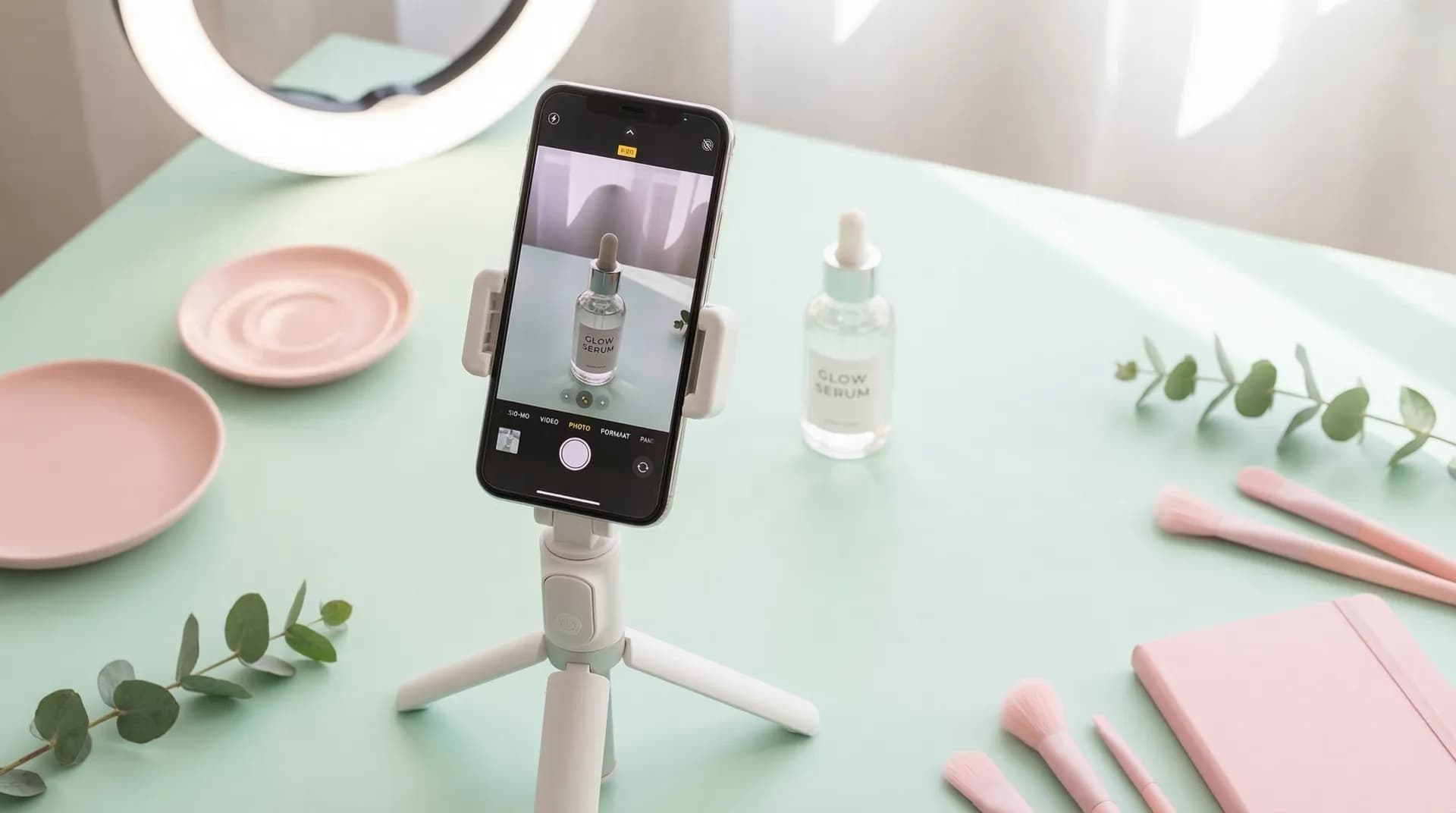
Just your hands interacting with the product. Unboxing, applying, pouring, assembling, using. This is extremely common in beauty, skincare, food, tech accessories, and home goods. Brands love it because it's clean, visual, and demonstrates the product in use — without the uncanny valley of stock footage.
It's also the easiest format to reshoot. Mess up a take? Nobody knows it was you.
B-roll and lifestyle footage
Pure environmental footage — a coffee being poured, a supplement placed on a marble counter, shoes laced up on a white couch. No voiceover, no hands visible, just visual storytelling. These clips are typically used as overlays in brand ads or cut alongside existing brand audio.
B-roll is the lowest barrier to entry of the three. You don't need to narrate or physically interact with the product. Set the scene, light it properly, capture clean footage. Done.
Most experienced faceless creators mix all three depending on the brief. The strongest faceless UGC portfolio shows range across formats — not just one approach endlessly repeated.

What goes in a faceless UGC portfolio
This is where most new creators go wrong. They drop a folder of raw clips into Google Drive and call it a portfolio. That's a file dump, not a portfolio.
A faceless UGC portfolio needs to do the same job any portfolio does: show brands exactly what they'd be buying, and make it effortless to say yes.
Here's what to include:
3–5 finished spec ads. Pick a niche or two and create polished, finished videos as if a real brand hired you. Use a product you already own, or buy something cheap. Edit it like it's going into a paid TikTok campaign — voiceover, captions, transitions, music, the whole thing. Don't label them "practice pieces." Call them spec ads. That's what they are.
Examples across all three formats. If you do voiceover, hands-only, and b-roll, include at least one of each. Brands want to see that you can flex your approach based on their brief.
A creator positioning statement. One or two sentences. Something like: "I specialize in voiceover UGC for beauty and wellness brands — product-forward storytelling, no face required." This immediately filters in the right clients and signals that you know exactly what you're doing.
Platform callouts. Label whether each piece targets TikTok, Instagram Reels, or YouTube Shorts. Aspect ratio matters. Show you understand the platforms you're creating for, not just the products.
For a full breakdown of every section a UGC portfolio needs, this template guide covers exactly what brands look for when they open your link — including what copy to write around your videos.
And if you want to see how other creators have structured their off-camera work, check out 15 UGC portfolio examples that actually land brand deals. Several of the examples in there are faceless or hybrid formats.
How to present faceless work to brands
The biggest hurdle for faceless creators isn't quality. It's confidence in presenting the work.
Some creators feel like they need to apologize for not being on camera. Don't. Lean into it. "I specialize in product-forward, off-camera UGC" is a positioning statement — not an excuse. Plenty of brands specifically want content that isn't testimonial-style.
When you send your portfolio, lead with format specificity. Not "here's my work" — instead try: "Here are three skincare ads I created using voiceover and product close-ups. Happy to create something similar for your Q2 campaign." That's a pitch. The first one isn't.
The complete guide to building a UGC portfolio that wins brand deals goes deep on presentation strategy — how to structure your portfolio page, what copy surrounds your videos, and how to frame everything to convert brand interest into paid briefs. If you haven't read it, start there before you start sending your portfolio to brands.
Also: keep your spec ads short. 15–30 seconds for most brand content, 45 seconds max. Brands aren't looking for a two-minute demo reel. They want proof that you can deliver tight, platform-native creative.
If you're brand new and don't have any work yet, the approach for building a faceless portfolio is almost identical to building any UGC portfolio with no experience. You create spec work, you anchor it around a niche or format, and you present it professionally regardless of how new you are to the space.
What brands actually think about faceless UGC
Honesty: some brands have a blanket "must show face" requirement in their briefs. It happens, especially in fashion and fitness. That's real, and it'll close some doors.
But a lot of that preference is assumption-based, not data-driven. Brands assume on-camera equals authentic equals high-converting. The reality is more nuanced. Research on UGC in paid ad performance consistently shows that authenticity and format-relevance outperform raw face visibility when it comes to click-through and purchase intent.
The categories where faceless UGC thrives: beauty and skincare, food and beverage, home and kitchen, tech accessories, wellness supplements, fitness equipment. All product-demonstrable categories where what the product does matters more than who's holding it.
Categories where on-camera tends to win: fashion styling (you need a body), fitness routines (movement is the content), personal finance (credibility runs through personality). Know where you fit.
Build your portfolio around the categories where faceless formats naturally land, and you won't spend much time fighting briefs that require face-on-camera talent.
One last thing. Once you land paid projects, ask the brand if you can include the finished creative in your portfolio with their sign-off. Real paid work beats spec ads every single time — and a 15-second skincare voiceover ad looks exactly like a 15-second on-camera ad once it's been used in an actual campaign. Nobody reviewing your portfolio asks "was the creator on screen?" They're looking at quality and brand fit. Give them both.
Frequently Asked Questions
Can you do UGC without showing your face?
Do brands care if UGC creators show their face?
What equipment do I need to start faceless UGC?
How much can a faceless UGC creator charge?
What niches work best for faceless UGC?
How do I build a faceless UGC portfolio with no experience?
Related reading
- How to build a UGC portfolio that wins brand deals
- UGC portfolio template: the exact sections brands want
- 15 UGC portfolio examples that actually land brand deals
- How to make a UGC portfolio with no experience (2026)
- UGC audio: how to sound as good as you look
- Best UGC portfolio website options (free & paid)