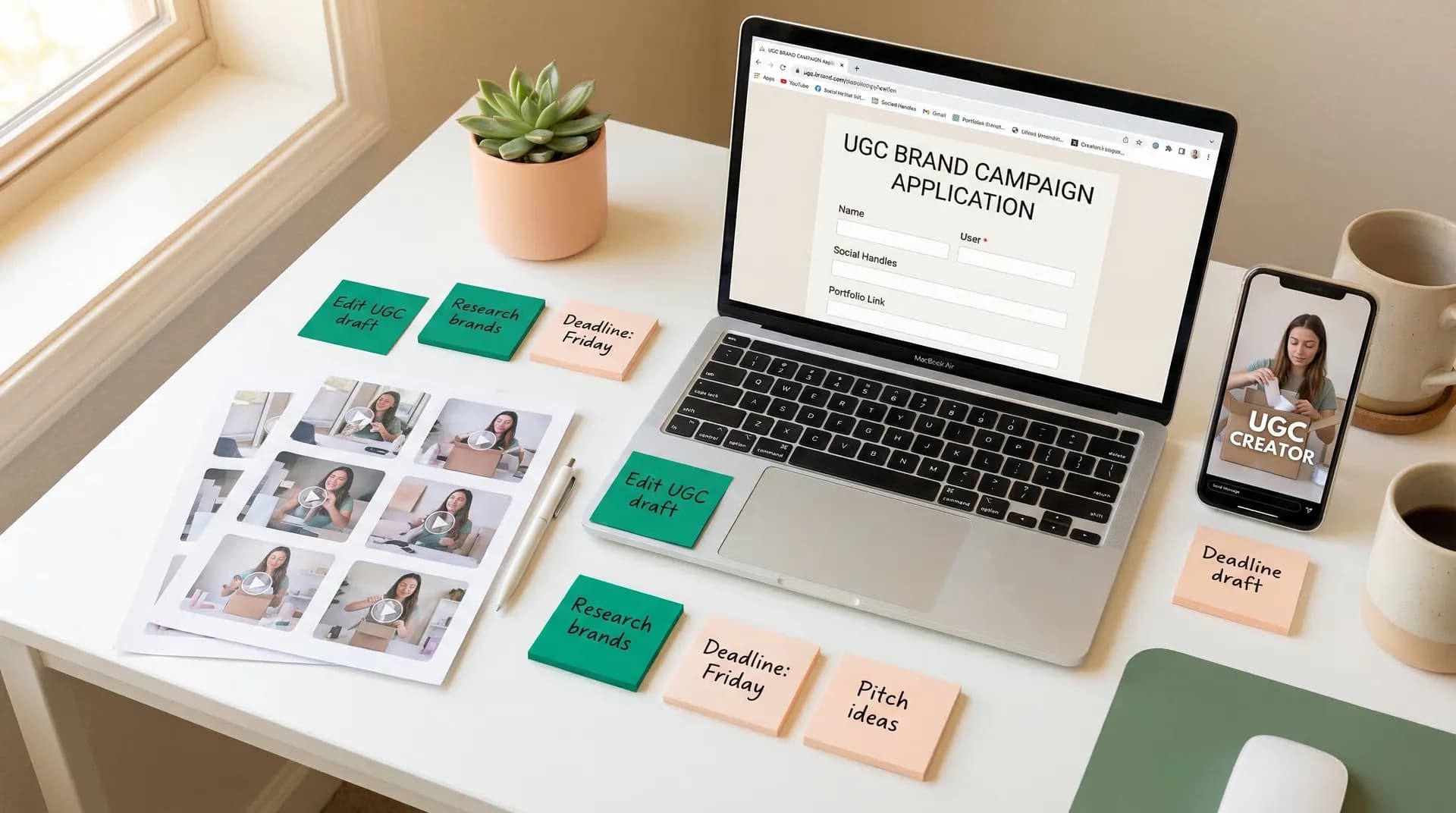
How to apply for UGC campaigns and actually get selected
Learn how to apply for UGC campaigns with sample clips that win, niche positioning that clicks, and pitch framing that gets brands to say yes.

I've spoken to brand managers who review 150 UGC applications in a single afternoon. Each creator gets maybe 20 seconds before the decision is made. Good creators get rejected. Mediocre ones land deals. And almost every time, the difference isn't content quality — it's the application itself.
If you're figuring out how to apply for UGC campaigns and actually get selected, the answer isn't "apply to more campaigns." It's apply better to fewer.
Here's what actually moves the needle.
How brands actually review UGC campaign applications
A campaign goes live on a platform like Billo, Cohley, or Trend.io. Applications start coming in — sometimes 50, sometimes 200+ for a single campaign. The brand manager sitting with that pile is scanning, not reading.
Their mental checklist is simple: Does this creator make content in this category? Do the samples look close to what we need? Is this profile complete enough to trust?
Three yes answers and you move to the shortlist. One no and you're usually done. The entire evaluation can happen in the time it takes to scroll through samples and glance at a pitch.
That means your goal isn't to be impressive in a long-form way. It's to be immediately readable. Every part of your application should answer "why you, why this campaign" in the first few seconds. Nothing else matters until you clear that initial scan.
What to include when you apply for UGC campaigns
The platforms vary, but they all ask for roughly the same things: samples, a short pitch, and some form of niche or category description. How you handle each one matters more than you think.
Sample clips: relevant beats impressive. Include 2-3 clips — not your entire portfolio. Brands don't want to browse a library. They want a clear match.
Pick samples closest in style and category to the campaign. If you're applying to a skincare brand, don't lead with your fitness content, even if that fitness video got 2 million views. The reviewer can't make the mental leap for you. Match the energy, even if it means submitting something slightly less polished.
Keep clips under 60 seconds. Brands are evaluating hook, delivery, and aesthetic feel — not your storytelling range. And keep your audio clean. Shaky footage is forgivable. Muddy audio gets you rejected before the first sentence ends. If you're not sure your audio is up to standard, our UGC audio quality guide is worth reviewing before you hit submit.
Your pitch: skip the bio. The most common application mistake is writing a bio when you should be writing a pitch. "Hi, I'm Jess, a lifestyle creator in Portland who loves trying new products" appears in roughly 40% of applications. It communicates nothing useful to a brand manager who's trying to fill a campaign.
What brands want to hear: why this specific product fits your content, and what you'd bring to it. One concrete sentence beats three generic ones. "I've covered SPF products for combination skin for two years and my audience consistently asks about performance under makeup — this fits naturally into what I already create" is a pitch. Specific. Useful. Already hinting at content angles.
Niche description: specific wins every time. "Beauty creator" is noise. "Skincare for oily/combination skin in your 30s" is signal. "Fitness creator" is noise. "Home workouts for postpartum recovery" is signal.
Brands aren't just looking for skilled creators — they're looking for creators whose voice and audience match their customer. The more specifically you define who you speak to, the clearer it becomes that you're the right fit. When you nail the niche description, brands don't just pick you — they feel like they found exactly what they were looking for.
Not sure what niche to claim? Look at your last 6 months of content and find which posts got the most engagement. The pattern is almost always there — your audience tells you what they want from you, if you pay attention.
How to frame your pitch so it actually gets read
Most application pitches read the same: lots of enthusiasm, zero specificity. "I'm super excited about this product and would love to work with your brand!" That sentence is in roughly every other application. It signals nothing because it costs nothing to write.
Here are the types of phrases that actually work because they tell the brand something useful:
- "I already use [product category] daily, so this fits without forced enthusiasm."
- "I've made [X] videos in this category — here are two that performed well for similar products."
- "My audience skews [age range + interest], which aligns with your target customer."
Short, specific, useful. Even one sentence like this elevates your application above the generic pile. You're not selling yourself as a creator in general — you're answering a specific business question: will this person make content our customers believe?
Apply early. This one's underrated. Many brands fill spots on a rolling basis rather than waiting to review all applications together. Applying in the first hour or two puts you in front of reviewers before their attention gets diluted by volume. I've seen creators land campaigns because they were simply fast — their application arrived before the reviewer got overwhelmed and started speed-scanning.
The sample clip mistake that costs most creators their acceptance rate
Here's what almost nobody talks about: most creators send their best samples, not their most relevant ones.
You might have a beautiful, well-edited video that performed well on social. But if it's in the wrong category for this campaign, it's actively unhelpful. The reviewer can't mentally transpose your skincare routine into a pet supplement ad. You're giving them homework and most of them won't do it.
The fix: submit samples that are explicitly in or adjacent to the campaign's category, even if they're not your most impressive work. A 45-second, moderately produced video about skincare beats a cinematic travel reel every time — if you're applying to a skincare campaign.
And if you don't have relevant samples yet? Make one. Film something in your target category this week. A relevant, recent clip made specifically for your niche does more for your acceptance rate than anything else you can change in an application. This is exactly the mindset behind building a portfolio that actually works — check out how to make a UGC portfolio with no experience if you're starting from scratch.
What brands actually want from a UGC application
Understanding the buyer's priorities makes your applications sharper. Most UGC buyers aren't hunting for the most creative creator in the world. They want four things:
Reliability — will this person deliver on time without hand-holding? Your application signals this through completeness and professionalism. A half-empty profile screams future headache.
Brand-safe delivery — authentic without being chaotic. Brands need content they can actually use in ads. They want real, not raw.
Category familiarity — not expertise, just genuine familiarity. A creator who clearly lives in the space beats a technically skilled creator who's clearly doing research before filming.
Clean production — specifically audio and lighting. Everything else is negotiable.
If you've spent time understanding a campaign brief properly before applying, you'll answer all four of these implicitly. Reading a brief isn't just about knowing the deliverables — it's about understanding what the brand is trying to communicate. Our guide on how to read a UGC campaign brief breaks down what brands are actually signaling in their briefs, and that understanding directly changes what you say in your application pitch.
For the full picture — from finding campaigns to getting paid — the pillar guide on how to land UGC campaigns as a creator in 2026 covers everything the application process connects to.
On platforms where you've previously delivered work, your track record is visible to brand managers. Even one successful, on-time delivery builds trust. Your first campaign isn't just a payday — it's a history that makes future applications easier to approve.
After you apply: your profile keeps working
On most platforms, you can't follow up directly with the brand. But your profile continues making the case after you hit submit.
Make sure it's complete: bio, niche categories, relevant samples, and social links. Brands often revisit profiles of creators they're interested in but aren't certain about — an incomplete profile during that revisit is a missed opportunity for no good reason.
On platforms that do allow messaging, a brief follow-up 24-48 hours after applying doesn't hurt — but only if you have something new to say. "I just published a relevant video — thought it might be useful context" is a reason to reach out. "Just checking in" is noise that damages your professionalism score before you've even filmed anything.
This connects to the broader skill of pitching brands for UGC — every touchpoint is a chance to demonstrate that you're specific, professional, and worth betting on.
A quick word on rejection
You're going to get ignored. A lot. That's just the math. Brands receive far more applications than they can use and they're making fast, sometimes imperfect decisions.
The useful question isn't "why didn't they pick me?" It's "is there a consistent pattern in what's not working?" If your acceptance rate sits under 10%, check your samples first — are they relevant to what you're applying for? Then check your pitch — are you being specific? Then check your niche description — are you giving brands enough context to feel confident?
The creators I've seen go from single-digit to 30-40% acceptance rates didn't reinvent their content. They just got more precise in how they described their fit. A cleaner application wins campaigns. The content comes after.
Frequently Asked Questions
What should I include in a UGC campaign application?
How many sample clips should I include in a UGC application?
Do I need a large following to apply for UGC campaigns?
How do I stand out in a UGC campaign application?
Why do UGC applications get rejected?
Should I apply for UGC campaigns as soon as they go live?
Related reading
- How to land UGC campaigns as a creator in 2026
- How to read a UGC campaign brief (and what brands want)
- Best UGC platforms for creators to find paid campaigns
- How to pitch brands for UGC: cold outreach templates
- How to make a UGC portfolio with no experience (2026)
- UGC audio: how to sound as good as you look
- UGC hooks that stop the scroll and win campaigns