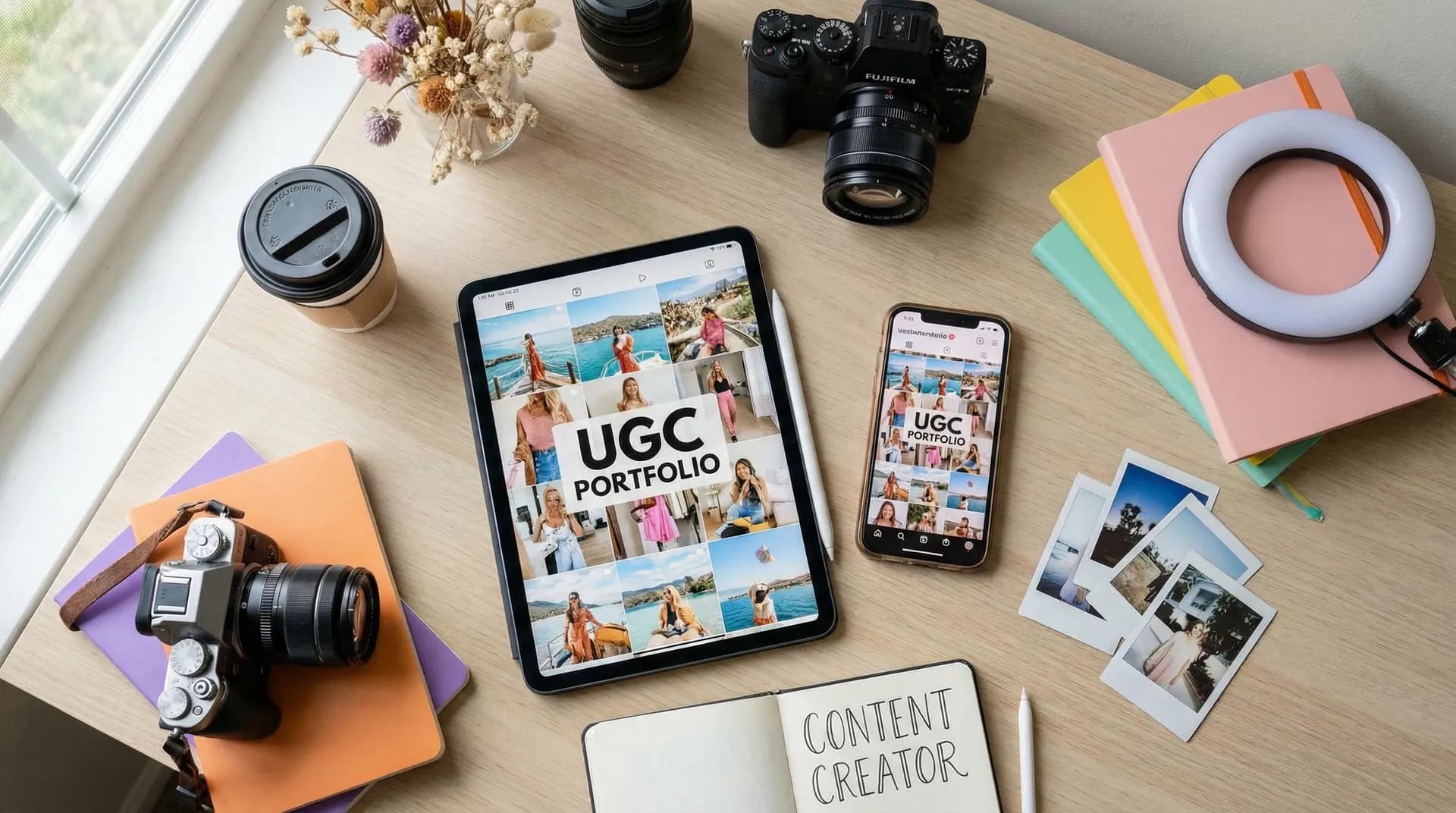
How to Build a UGC Portfolio That Wins Campaigns
Learn how to create a standout UGC portfolio that gets brands to say yes. Includes what to include, tools to use, and real examples of winning portfolios.

Your portfolio is your resume in the UGC world. It's the first thing brands look at when deciding whether to hire you. A strong portfolio can mean the difference between landing a $500 campaign and getting ignored.
Here's how to build one that actually wins campaigns.
Why your portfolio matters more than followers
Brands hiring UGC creators don't care about your follower count. They care about one thing: can you make content that sells? According to Influencer Marketing Hub, 79% of brands say UGC has a bigger impact on purchasing decisions than influencer content.
Your portfolio proves you can deliver. It's your proof of concept — a collection of your best work that shows brands exactly what they'll get when they hire you.
Unlike influencer marketing, UGC doesn't require a big audience. Brands pay for content, not distribution. This means your skills and portfolio are everything.
What to include in your UGC portfolio
A winning portfolio has 5-8 pieces that show range and quality. Here's what brands want to see:
1. Product review videos
These are the bread and butter of UGC. Film a 30-60 second review of a product you already own. Focus on:
- Strong hook — First 3 seconds need to grab attention
- Clear audio — Use a clip-on mic or record in a quiet space
- Good lighting — Natural light or a ring light makes a huge difference
- Genuine reaction — Don't script everything. Brands want authentic reactions
2. Unboxing content
Show the experience of receiving and opening a product. Sprout Social research shows that unboxing videos are among the most shared content types on social media.
3. Lifestyle integration
Film yourself using a product naturally in your daily routine. This is the hardest type to nail but the most valuable — it shows brands you can make their product look like a natural part of someone's life.
4. Before-and-after content
If applicable, show the transformation. Skincare, cleaning products, organization tools — before-and-after content performs extremely well in ads.
You don't need to wait for brands to hire you. Create sample content with products you already own. Some of the best UGC portfolios are built entirely with products the creator bought themselves.
Tools you need (and don't need)
You don't need expensive gear. Here's what actually matters:
| Tool | Budget option | Pro option |
|---|---|---|
| Camera | Your smartphone (iPhone 12+ or equivalent) | Sony ZV-1 or similar |
| Lighting | Window light + $15 reflector | Ring light ($30-50) |
| Audio | Quiet room + phone mic | Lavalier clip-on mic ($20) |
| Editing | CapCut (free) | Adobe Premiere Rush |
| Tripod | Stack of books | Phone tripod ($15) |
As HubSpot's marketing research points out, authenticity beats production quality. Brands prefer content that feels real over content that looks like a Super Bowl ad.
How to organize your portfolio
There are a few ways to present your work:
Option 1: Google Drive folder
Simple and effective. Create a folder with your best 5-8 pieces, organized by content type. Share a view-only link. This works well when you're just starting out.
Option 2: Notion or Carrd page
Create a simple one-page site with embedded videos, a short bio, your rates, and contact info. This looks more professional and is easy to update.
Option 3: Creator marketplace profile
Platforms like Crelio let you build a creator profile that doubles as your portfolio. Brands can see your work, reviews from past campaigns, and hire you directly. This is the most efficient option since brands are already browsing for creators.
Don't spread your portfolio across too many platforms. Pick one primary place and keep it updated. A stale portfolio with year-old content signals you're not active.
Common portfolio mistakes to avoid
After reviewing hundreds of creator portfolios, here are the most common mistakes:
- Too much content — 5-8 pieces is ideal. Don't include everything you've ever made. Only show your best work.
- Poor audio quality — This is the #1 dealbreaker for brands. Bad video quality is forgivable. Bad audio is not.
- No variety — If all your samples are the same style, brands won't know if you can handle their specific brief.
- Missing contact info — Make it dead simple for brands to reach you.
- Outdated content — Refresh your portfolio every 2-3 months with new pieces.
Make your first pieces without a brand deal
The catch-22 of UGC is that you need a portfolio to get hired, but you need to get hired to build a portfolio. Here's how to break the cycle:
- Use products you own — Your favorite skincare, kitchen gadget, or tech accessory all work
- Re-create successful ads — Find UGC ads on TikTok or Instagram and film your own version
- Ask local businesses — Offer to create a free sample piece for a local restaurant or shop
As we explain in our guide to landing your first UGC campaign, brands are increasingly looking for quality over quantity. Three excellent portfolio pieces beat twenty mediocre ones.
Level up with feedback
Once you have your first pieces, get feedback:
- Post in UGC creator communities on Discord or Facebook
- Ask other creators to review your work
- Pay attention to which pieces get the most interest from brands
The brands that are shifting budgets to UGC are looking for creators who show professionalism and skill. Your portfolio is how you prove you're one of them.
Bottom line
Your UGC portfolio is a living document. Start with what you have, improve it constantly, and let your work speak for itself. The creators who take their portfolio seriously are the ones who consistently win campaigns.
Ready to showcase your work? Create your creator profile on Crelio and start browsing campaigns today.
Related reading
- How to land your first UGC campaign — Step-by-step guide for new creators
- Why brands are shifting to UGC — The market shift driving demand for UGC creators