How to land UGC campaigns as a creator in 2026
Everything creators need to know about landing paid UGC campaigns — where to find them, what brands want, how to price your work, and how to keep the deals coming.

Last year, a brand reached out to me with a UGC campaign brief. $150 per video, three deliverables. On the surface, a fine deal. But buried in the usage rights section was perpetual, unlimited whitelisting across all paid channels — forever. That one misread clause was worth more than the entire fee.
UGC campaigns have become the primary way brands buy content at scale. And most creators are leaving serious money on the table because they don't fully understand how the machine works. This guide is the full picture — how UGC campaigns are structured, where to find them, how to price your work, and how to turn one-off deals into a reliable income stream.
What UGC campaigns actually are (and the misconception killing your pitches)
A UGC campaign is a paid arrangement where a brand commissions creators to produce content — video, photos, or written testimonials — that looks and feels like organic consumer content. The brand uses it in their own paid ads, organic social, email, or on their website. You don't need to post it to your audience. Your follower count is irrelevant.
This is the single biggest misconception I see from new creators. They think UGC is just influencer marketing with a different name. It isn't. Influencer marketing pays for reach. UGC campaigns pay for content. A creator with 400 followers can absolutely land a $500 UGC deal if their content quality is strong and they understand the brief.
The shift is real and accelerating. Brands are reallocating budgets away from macro-influencers because UGC-style ads outperform polished brand content by massive margins on platforms like Meta and TikTok — lower CPMs, higher CTR, better conversion rates. Brands have noticed. Now they're buying UGC at scale, and that's where your opportunity sits.
How brands actually run UGC campaigns
Before you can pitch effectively, you need to understand how these campaigns are procured. Most brands use one of three models:
Self-service platforms. The brand posts a campaign brief on a marketplace (Billo, Insense, Cohley, JoinBrands, etc.). Creators apply. Brand selects. Simple.
Agencies. UGC-specific agencies like Soar With Us or No Good manage the process end-to-end for their clients. They have rosters of vetted creators and tap them directly when a campaign fits.
Direct outreach. Especially common with DTC brands. A marketing manager finds creators they like, checks the portfolio, and emails with an offer. No platform middleman.
Each model has different pay structures, timelines, and expectations. Platform campaigns tend to be faster but lower-paying. Agency relationships pay better and give more repeat work. Direct outreach can go either way.
If you're getting platform campaign requests but not agency or direct outreach, the bottleneck is usually your portfolio. Brands doing direct hire want to see a polished body of work before they risk budget. Fix the portfolio first.
Where to find paid UGC campaigns
Most creators start on marketplaces because the barrier is low. Here's where the real volume lives in 2026:
Billo — Primarily TikTok and Meta video ads. High volume, lower rates (typically $50–$150/video). Good for building experience fast.
Insense — Higher-quality brands, better rates ($150–$500+), more complex briefs. Vetted creator pool means less competition once you're in.
JoinBrands — Growing fast. Mix of product gifting and paid campaigns. Good for lifestyle and wellness niches.
Cohley — Tends to attract larger consumer brands. Photo and video both. Less creator volume than Billo but stronger brand names.
LinkedIn + cold DM. Underrated by 99% of creators. Go find DTC brand marketing managers and performance marketers. Send a short, specific pitch referencing their current ad creative. Conversion rate is low but deal value is high when it lands.
Creator agencies. Apply to agencies that specifically manage UGC creator rosters. The application process is more involved but once you're in, briefs come to you.
Don't spread yourself too thin. Pick two platforms to start, build your track record, then expand. Five mediocre profiles beat one focused one exactly zero times.
What brands look for in a UGC creator
The brief matters more than your profile. But what gets you shortlisted in the first place?
Content quality over production value. Brands aren't looking for cinematic. They're looking for authentic, on-brand, technically clean. Good lighting. Clear audio. No shaky handheld. A creator who understands that audio quality is just as important as visuals will consistently beat someone with a better camera but muddy sound.
Demonstrated niche fit. If you're applying for a skincare campaign and your portfolio is full of tech unboxings, you're not getting picked. Brands want to see you've created in their world before.
Turnaround reliability. Sounds obvious, but late delivery kills creator reputations fast. Brands talk. Marketing agencies especially keep mental notes on who delivers clean work on time.
Communication. A creator who responds quickly, asks one smart clarifying question upfront, and sends a preview before final delivery is worth twice their rate to a stressed-out brand manager.
Your UGC portfolio is the first thing they'll check. If it doesn't immediately show relevant, high-quality examples in the brand's category, you're out before the pitch even lands.
Brands running performance ads aren't judging your aesthetics — they're imagining whether your video will stop scroll. Hook, authenticity, clear product demo. That's the checklist running through their head.
How to pitch for UGC campaigns that convert
Platform applications are straightforward — fill out the form, attach portfolio samples, write a short bio. But for direct outreach and agency applications, your pitch is the difference between a yes and silence.
A pitch that works:
- Opens with a specific reference to their brand or product (not "I love what you do")
- States your niche and why it's relevant to them in one sentence
- Links directly to two or three portfolio samples in their category
- States your rate range upfront (saves everyone time)
- Keeps it under 150 words total
A pitch that doesn't work: three paragraphs about your "passion for content creation," no portfolio link, no rates, no evidence you've spent 30 seconds thinking about their brand.
Brands receive dozens of creator pitches weekly. The ones that get responses are specific, confident, and make it frictionless to say yes.
For landing your first UGC campaign, the bar is lower than you think — a brand just needs to trust you'll deliver clean content on brief. That trust comes from your portfolio and how professional your pitch looks.
UGC rates: what to charge in 2026
Pricing is where most creators undercharge chronically, or price themselves out by copying influencer rate cards that don't apply.
Here's a rough framework for UGC video rates in 2026:
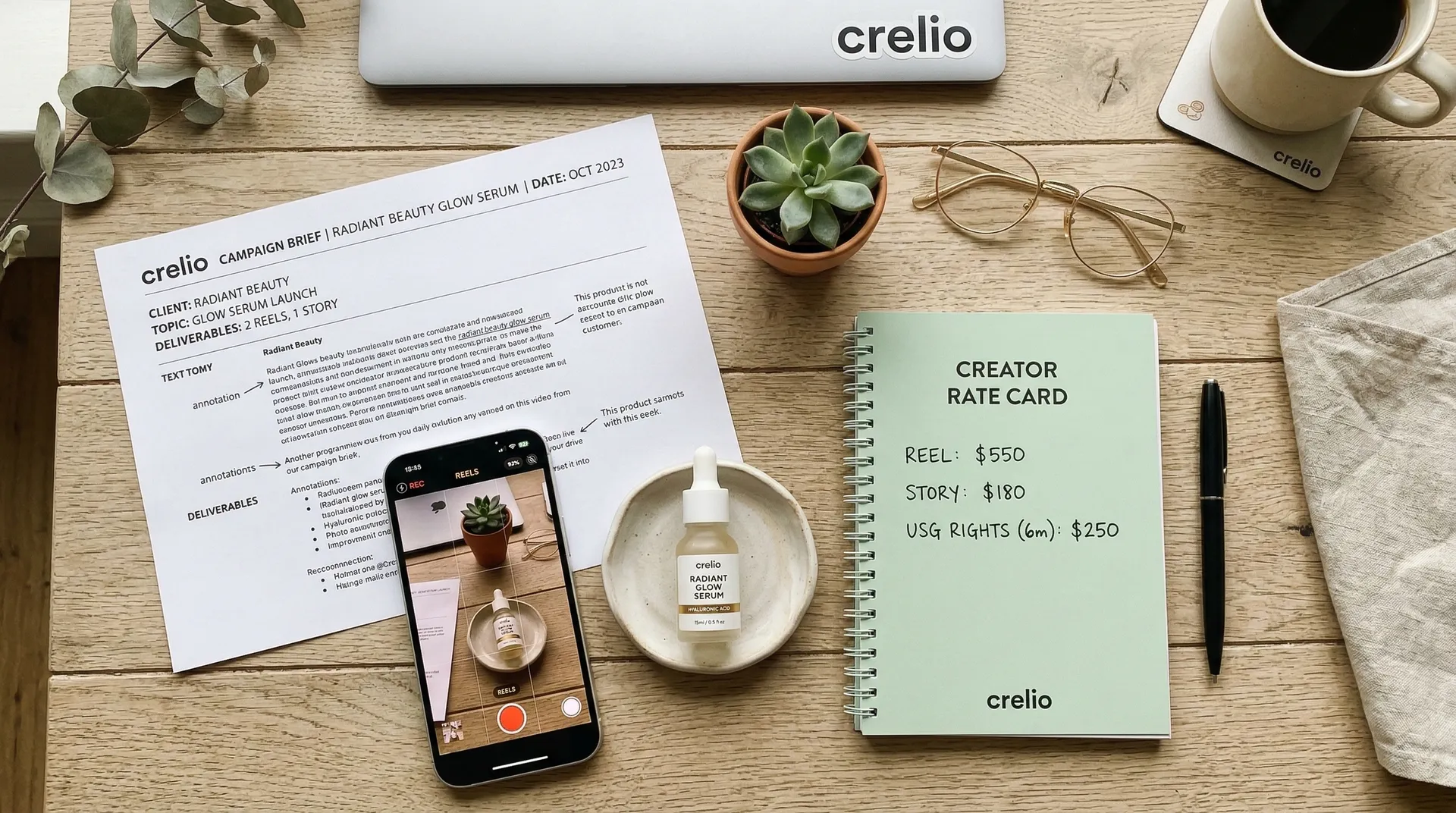
| Deliverable | Entry (new creator) | Mid-tier (solid portfolio) | Established |
|---|---|---|---|
| 15–30s video, no usage | $75–$150 | $200–$400 | $500–$800 |
| 15–30s + 30-day usage | $150–$250 | $350–$600 | $750–$1,200 |
| 15–30s + unlimited usage | $300–$500 | $600–$1,000 | $1,500+ |
Usage rights are where the money is. Content used in paid ads generates revenue for the brand every day it runs. A video running for six months on Meta ads is worth vastly more than the creation fee suggests. Price it accordingly.
Other factors that move your rate up: exclusivity (they can't hire competitors), rush turnarounds, multiple hooks/variations, raw footage handoff, and posting to your own account.
Don't negotiate down on usage. You can negotiate on number of deliverables, but selling unlimited perpetual rights for a flat $200 creation fee is giving away the most valuable part of the deal.
Always get usage rights in writing before you start filming. "We'll just use it on our Instagram" is not a usage license. Verbal agreements evaporate the moment the campaign performs well and the brand wants to run it as a paid ad.
Reading the brief and nailing delivery
A campaign brief is a contract in disguise. Reading it carefully before you start saves you from revisions, disputes, and the brand quietly not hiring you again.
Things to check every time:
- Hook requirements — does the brand want you to start with a specific line, or is it open?
- Mandatory inclusions — product name pronunciation, key claims, disclaimers, calls to action
- Prohibited content — competitor mentions, certain words or visuals, claims that need FDA clearance
- Aspect ratio and length — 9:16 vs. 4:5 vs. 1:1, and hard maximums on video length
- Deliverable format — raw files or exported MP4, with or without captions, color grading or natural
- Timeline — first draft due date, revision rounds allowed, final delivery deadline
If anything is unclear, ask before you film. One clarifying question upfront beats three revision rounds after. Brands running video production at scale appreciate creators who ask smart questions — it signals you've read the brief properly.
Send a preview or first cut before final export. It's not required, but it builds trust and catches misalignments early. Brands who feel confident in your process will hire you repeatedly.
Building a campaign pipeline, not just one-off deals
One campaign pays you once. A campaign pipeline is a business.
The creators making $3,000–$8,000/month from UGC aren't just applying to more briefs. They're converting first-time brand clients into retainers.
After delivering a strong first campaign, follow up with a short message: "Really enjoyed working on this. I'd love to offer a monthly retainer package if it would be useful — [X videos/month at Y rate]. Happy to scope it out if helpful." Simple. Non-pushy. Many brands will say yes because finding and briefing new creators every month is a pain they'd rather eliminate.
Also: ask for feedback after delivery. Most brands won't give it unless you ask. That feedback tells you exactly what to optimize — and brands who gave feedback remember you as someone who cares about quality.
Referrals are the other pipeline builder. Marketing managers move between companies. Agencies have multiple clients. One good working relationship can follow you into three different brand campaigns with no extra outreach effort.
According to research from Later, UGC creators who focus on relationship-building over volume application see significantly higher deal rates within six months. That tracks with what I see in the creator community.
The math is simple: five reliable retainer clients at $800/month each is $4,000/month recurring. That's a much more stable foundation than constantly chasing new campaigns at $150 a pop.