How to negotiate brand deals: scripts and tactics that work
Stop accepting lowball UGC offers. Learn how to negotiate brand deals with counter-offer email scripts and tactics that actually get you paid more.

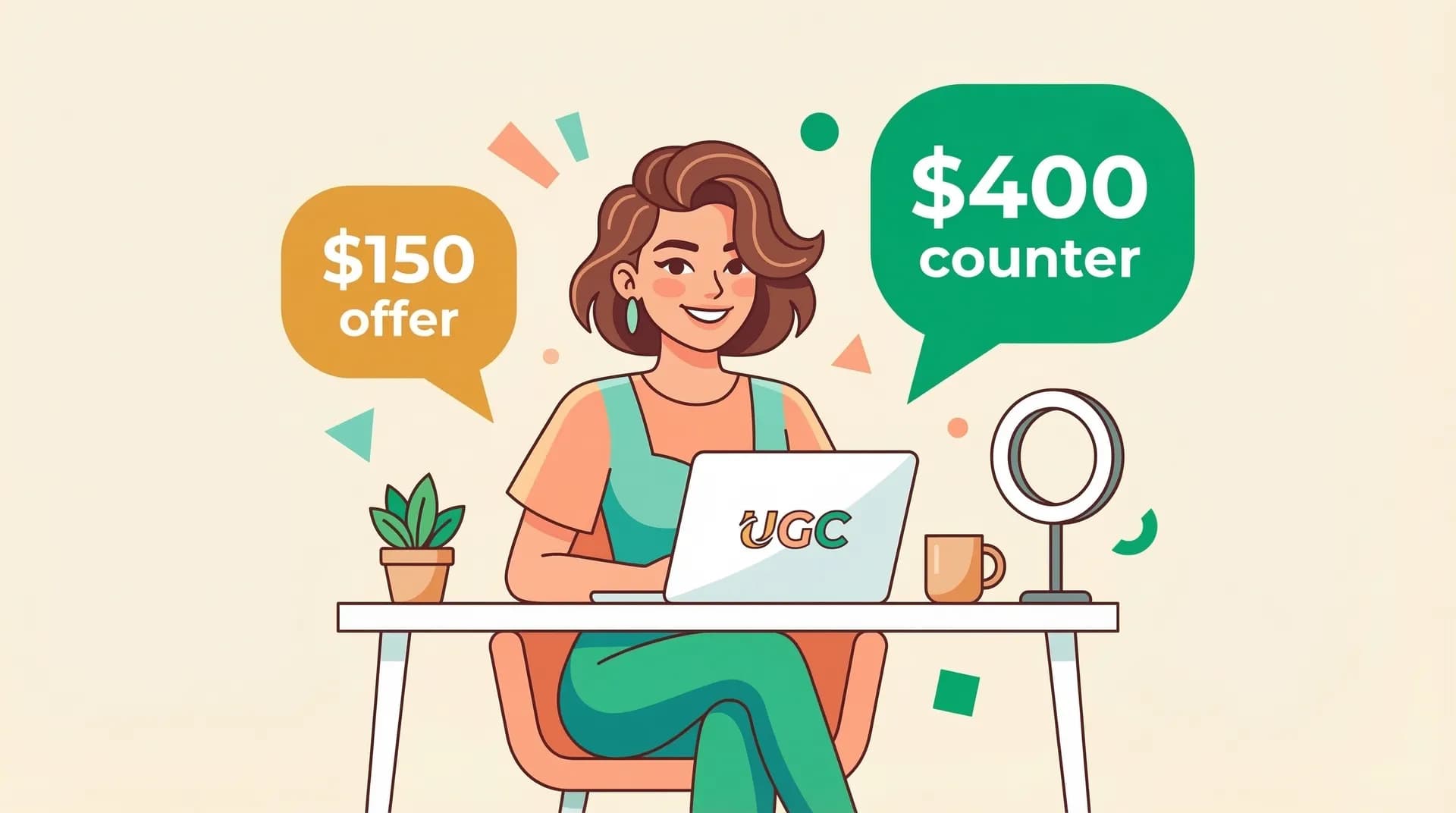
A brand just emailed you. They want a 60-second UGC video, two rounds of revisions, and full usage rights for their paid ads. Their budget? $150.
Your actual rate for that scope is $400.
What most creators do: say yes, deliver, and silently resent the brand for the next three weeks. What you should do: counter. Because that brand almost certainly has more room in the budget than that opening number suggests — and the worst they can say is no.
Knowing how to negotiate brand deals is one of the most financially impactful skills a UGC creator can develop. You don't need an agent. You don't need a massive audience. You just need a process and the confidence to use it.
Why brands open low on UGC brand deals — and why it's not personal
Brand partnership managers have budgets to protect. Their job is to acquire content at the lowest rate they can, and they know from experience that most creators accept whatever they're offered. So the opening number is rarely the real number.
Think of it like buying a car. The sticker price is the starting point, not the final price.
A brand offering $150 for a $400 job isn't being malicious. They're running a process. Your job is to run one too.
One more thing worth knowing: if a brand ghosts you after a reasonable counter, they weren't a real partner anyway. Serious brands expect negotiation. The ones who disappear after you push back a single time were never going to respect your work or pay reliably on time.
Know your floor before you reply
You can't negotiate effectively without knowing what you're worth. This is where most creators stumble — they counter with a vague number, the brand pushes back, and suddenly they're making concessions they never planned for.
Before responding to any offer, lock in three numbers:
- Your base rate — what you charge for this type of content at standard scope
- Your walk-away number — the absolute minimum you'd accept
- Your ask — what you'll counter with (typically 20–40% above your base rate to leave room for their response)
If you haven't solidified your base rates yet, the UGC creator salary & rates: what to charge in 2026 guide covers benchmarks across experience levels and content types. Get that foundation solid first — then every negotiation becomes a straightforward math problem instead of a gut-feel guessing game.
The anatomy of a good counter-offer
A strong counter isn't just "my rate is actually $400." It's a short, professional message that:
- Acknowledges the offer warmly (one sentence — that's it)
- States your counter clearly
- Briefly signals value without over-explaining
- Keeps the door open
That's the whole formula. No essays. No apologies. No "I totally understand if this doesn't work for your budget."
The biggest mistake creators make? Over-justifying. When you write three paragraphs explaining why you deserve more, you signal that you don't believe it yourself. A confident counter is short. The rate speaks for itself.
Email scripts to copy and adapt
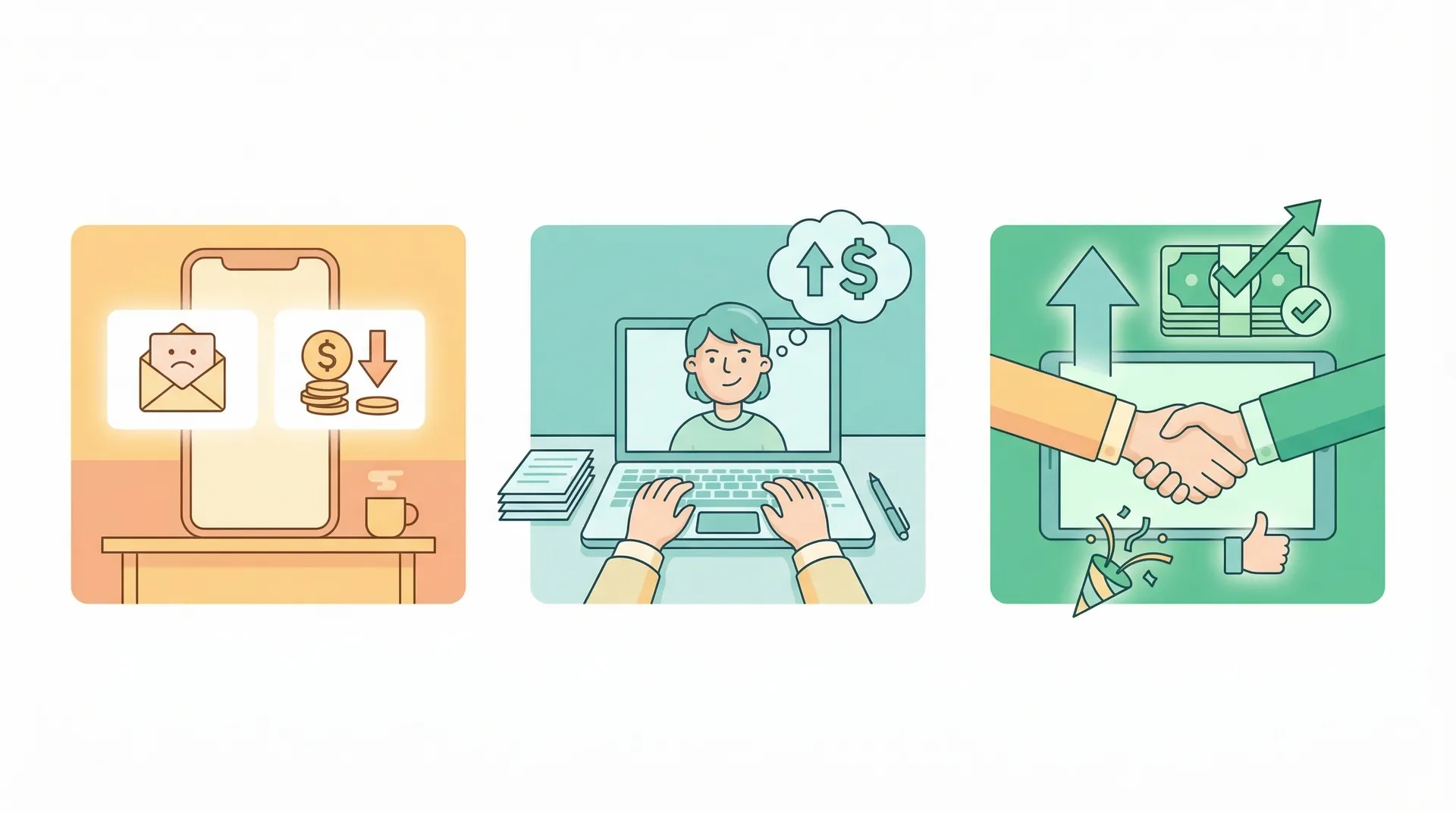
These are the three scenarios you'll hit most often.
Script 1: The straightforward bump
Use this when an offer is below your rate but not an insult.
Hi [Name],
Thanks so much for reaching out — [Brand] looks like a great fit for what I create.
For a 60-second video with two revision rounds and usage rights, my rate is $[your rate]. Happy to discuss what's included or adjust deliverables if that works better for your budget.
Let me know how you'd like to move forward!
[Your name]
Short. Warm. Your rate is stated as a fact, not a question. You're not asking if it's okay — you're presenting it and offering a path forward.
Script 2: The value-add counter
Use this when the brand seems price-sensitive but the deal is worth pursuing.
Hi [Name],
Really excited about this one — I've actually used [product] before and my audience responds well to this category.
My rate for this scope is $[your rate]. If budget is tighter, I could also offer [alternative scope — e.g., one video instead of two, or 30-day usage instead of 90-day] at $[lower rate]. Either way, I'll make sure the content performs.
What works best on your end?
[Your name]
This one gives the brand an exit ramp without you caving on your number. You're not dropping your rate — you're changing what they get for it.
Script 3: The deadline signal
Use this when you have other deals in motion or a brand has been slow to reply.
Hi [Name],
Thanks for coming back to me on this. I want to make it work — I have a couple of collaborations I'm finalizing this week, so I wanted to get ahead of it.
My rate for this project is $[your rate]. If we can confirm by [specific date], I can absolutely prioritize this in my schedule.
Looking forward to working together.
[Your name]
Deadlines move decisions. If you genuinely do have other work lined up, say so — that's not pressure tactics, it's honest context. And if you don't? Build the habit of setting real timelines on every reply you send.
Negotiate the whole deal, not just the flat fee
Brands often have flexibility in places creators forget to push. If you hit a wall on price, try these levers instead.
Usage rights duration. A 90-day ad license costs more than a 30-day one. If the brand won't move on price, shorten the license period — if they want to extend it later, they pay a renewal fee. The UGC usage rights: how to price licensing fees guide has specific numbers for what to charge at each tier.
Exclusivity. If they want you locked out of competitor brands for 60 or 90 days, that's a premium add-on. Standard exclusivity fees range from $100 to $500+ depending on your niche and their category size.
Revision rounds. Two rounds is the industry standard. A third round or unlimited revisions should either increase your rate or come out of the scope entirely.
Turnaround time. A seven-day deadline should cost more than a three-week one. If you haven't built rush fees into your UGC rate card, start now. Rush rates of 25–50% on top of your base rate are completely normal.
Each of these is a negotiating chip. You're not stuck choosing between your full rate and a discount — you can trade scope instead of dollars.
What to do when they say "that's over budget"
This is where most creators fold. Don't.
When a brand says they can't hit your number, you have exactly three options:
- Reduce scope — fewer deliverables, shorter usage period, fewer revision rounds. Be specific about what changes and by how much.
- Hold firm — some brands come back, especially once they've struggled to find someone else at the right quality. A reply like "Totally understand — if budget opens up, I'd love to work together" keeps the door open without surrendering ground.
- Walk away — if their best offer lands below your walk-away number, this isn't a deal worth taking. Underpriced work fills your calendar and keeps better opportunities out.
Never make a unilateral concession. If you drop your rate, drop something from scope at the same time. Always. It trains brands to respect your pricing rather than treating it as a starting point for extraction.
For calibration on what's worth accepting versus what's genuinely too low, how much to charge for UGC: beginner rates breakdown has benchmarks across experience levels so you know where you actually stand in the market.
One thing that changes every negotiation
A documented rate card shifts the dynamic entirely. Instead of countering with a number that sounds made up, you send a clean one-pager with your services, rates, and what's included at each tier. It signals professionalism. It removes ambiguity. And it makes your pricing feel non-negotiable — because it's in writing.
Brands negotiate harder against a verbal quote than against a structured document. Build one before your next inquiry lands.
Once a brand agrees to your counter, get the terms in writing before you film a single frame. A UGC contract protects you on usage rights, payment timelines, and revision scope — all the things that cause problems after the deal is done.
The market for UGC brand deals is growing fast. Brands are allocating more budget to creator content than ever — which means your negotiating position is stronger than it was two years ago. Use it.
Frequently Asked Questions
How do I negotiate brand deals as a new UGC creator?
What should I say when a brand's UGC offer is too low?
Is it normal to counter-offer on a brand deal?
How much should I counter a brand deal offer?
What if a brand ghosts me after I counter-offer?
Can I negotiate usage rights instead of the flat fee?
Related reading
- UGC creator salary & rates: what to charge in 2026
- How much to charge for UGC: beginner rates breakdown
- UGC usage rights: how to price licensing fees
- How to build a UGC rate card that wins brand deals
- TikTok UGC rates: how to price your ad creatives
- UGC contract template: what to include before you film