How to pitch brands for UGC: cold outreach templates
Learn how to pitch brands for UGC with proven cold email and DM templates. A step-by-step outreach strategy to land paid deals without waiting for inbound.

The first UGC deal I ever landed didn't come from a platform. No algorithm matched me with a brand. No inbound inquiry landed in my inbox. I found the name of a marketing manager at a small supplements company on LinkedIn, wrote four sentences, and had a $350 deal confirmed within 48 hours.
That was years ago. The strategy is still the same.
Most creators wait. They sign up for UGC platforms, build a portfolio, and sit there hoping brands find them. That works eventually — but it's slow and it puts you at the mercy of someone else's algorithm. Cold outreach puts you in control. You pick the brands, you set the pace, you decide how much you earn this month.
This is the full playbook: how to pitch brands for UGC, who to contact, what to say, and the exact templates that get replies.
How to pitch brands for UGC — and why most pitches get ignored
The reason most cold pitches fail isn't the email itself. It's what's in it.
Creators lead with themselves. "Hi, I'm [name], I'm a UGC creator with X followers and I make great content for brands." This is the pitch equivalent of walking up to a stranger and handing them your CV. Nobody asked. Nobody cares yet.
Brand managers are busy. A social media manager at a mid-size DTC brand is already fielding campaign briefs, coordinating with paid media teams, and managing a content calendar. Your pitch lands in the same inbox as 30 other creator emails that week. The ones that get a reply aren't the most polished. They're the most specific.
What a brand actually wants to know from your pitch:
- Do you understand our product and customer?
- Have you done this for a brand like ours before?
- Is working with you low-friction?
That's it. Answer those three questions and you're ahead of 90% of pitches landing in that inbox.
For the full picture on building a pipeline — platforms, outreach, converting leads into deals — the guide on how to land UGC campaigns as a creator in 2026 covers the whole funnel. Cold outreach is one engine inside that larger system.
Finding the right person to pitch
This step matters more than the template. Emailing [email protected] is a coin flip. You need a real person with a real name and a real stake in content performance.
The titles you're looking for: Social Media Manager, Head of Content, Brand Partnerships Manager, Content Marketing Manager. At smaller brands — say, under 50 employees — the Marketing Manager or even the CMO is often the right person. At startups, the founder runs the social account and checks every DM.
Three tools that make finding them fast:
LinkedIn is the most reliable. Search the brand name plus the job title. Most people have public profiles. Some include their email in the Contact Info section. Most don't — but once you have a name, you can piece together the email.
Hunter.io finds verified email patterns for any domain, free for up to 25 searches per month. If it tells you the company uses [email protected], you're done.
Apollo.io is better for volume. The free tier gives you access to verified contacts with emails. I use it when I'm running a batch of 15–20 pitches in a week.
Spend five minutes finding a real person's name and a plausible email before you write a single word. That alone separates you from the spray-and-pray crowd.
The cold email template that gets replies
Short wins. Every time.
Over 150 words and you've already lost them. The email's only job is to earn a reply — not to explain everything about you, your rates, and your creative process. Save that for the conversation.
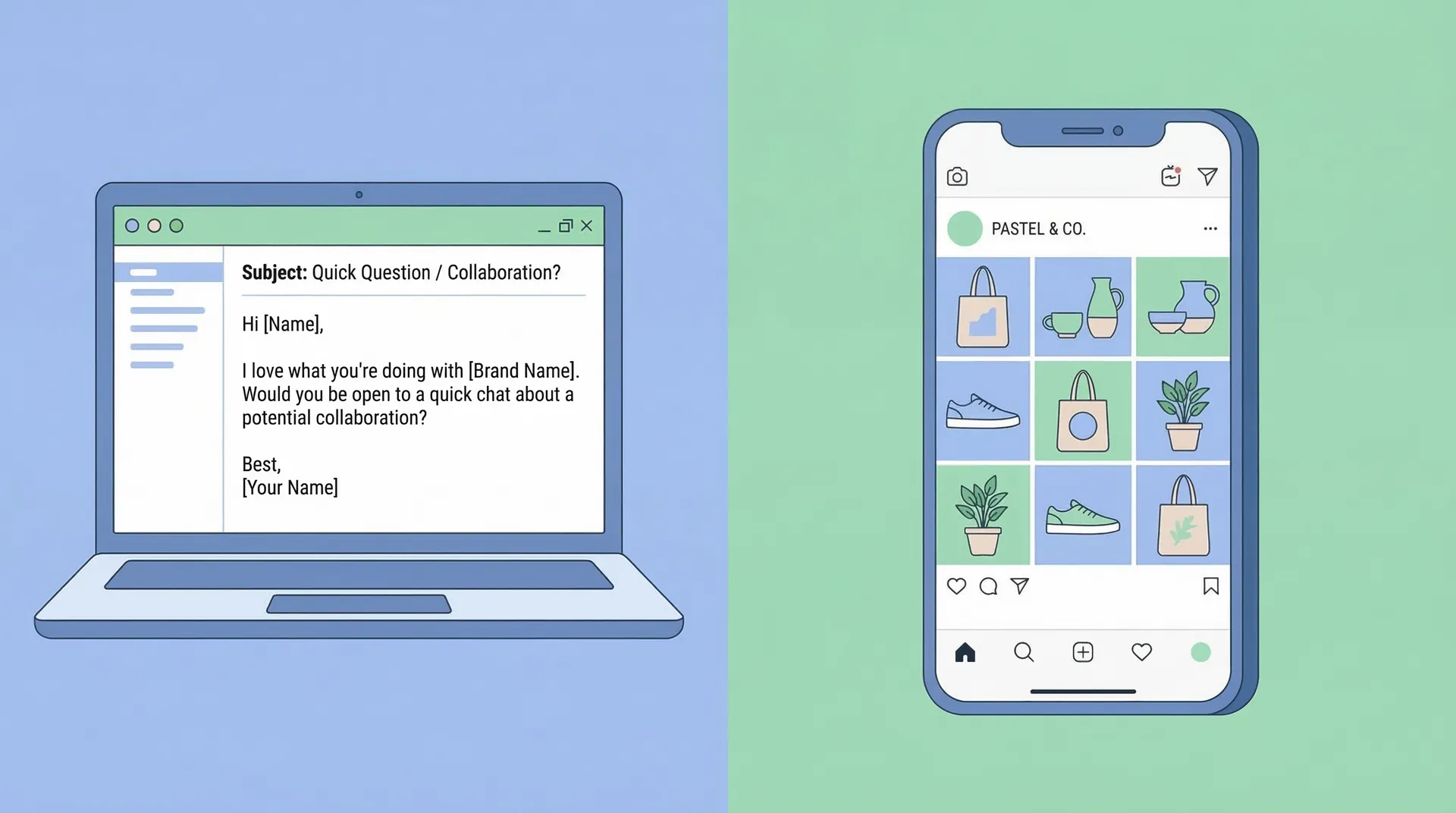
Subject: UGC for [Brand Name] — quick idea
Hi [First Name],
I've been using [product] for [X weeks/months] — specifically for [specific use case]. Love it. I create UGC content in the [niche] space and I think [Brand Name] is a natural fit for the kind of content I make.
I specialize in [e.g., "authentic review/demo videos for skincare brands"]. Here are three examples from recent campaigns: [Portfolio link]
Would you be open to a quick chat about a test collaboration? I work on a per-deliverable basis — no long-term commitment unless it makes sense for both sides.
[Your name] [Portfolio link] [Contact/social]
A few things to note:
The subject line. "Quick idea" signals low time investment on their end. Skip anything that sounds like a press release or a newsletter.
The opening. You've actually used the product. Or at minimum, you've done enough research to write like you have. This one detail disqualifies you from the "blast everyone" bucket.
Specificity over polish. "Authentic review/demo videos for skincare brands" is a real skill. "Creating engaging content that drives results" is nothing. Specific language signals experience. Vague language signals someone who just started yesterday.
Two portfolio links. People don't read linearly. If they skip the body, they catch it in the sign-off.
The low-commitment close. You're not asking them to sign anything. You're asking for a 15-minute conversation. Much easier yes.
The DM pitch: Instagram and LinkedIn
Email is the default. But sometimes a DM cuts through faster — especially for smaller brands where the founder or one marketing person is running the account themselves.
Instagram DMs work best for:
- Small-to-mid DTC brands (think: under $20M revenue)
- Founders actively managing their own brand accounts
- Niche lifestyle or wellness products where community feel matters
Keep it tight. Three sentences, max four.
Instagram DM template:
Hey [Name]! I've been using [product] for a while and genuinely love it. I create UGC content for brands in this space — short, authentic video content for ads and organic. Would love to put something together for [Brand Name] if you're open to it. Portfolio here: [link]
LinkedIn DMs are better for:
- Mid-size brands with actual marketing departments
- Reaching social and content managers you found by title search
- B2B-adjacent products: productivity tools, wellness at work, etc.
Slightly more formal, but not stiff. Warmth still matters.
LinkedIn DM template:
Hi [Name] — I came across [Brand Name] while looking into UGC campaigns in the [niche] space. I create short-form video content for brands like yours and think there could be a natural fit. Happy to share some ideas. Portfolio: [link]. Let me know if a quick call makes sense.
If you're still building your outreach target list, the best UGC platforms for creators are worth checking — some surface direct brand contacts and active campaigns you can reference in your pitch.
The follow-up sequence
Most deals close in the follow-up. Not in the first email.
Brand managers get pulled in 15 directions. They see your pitch, mean to reply, and forget. Three days later they can't find it. You need to bump it back to the top without becoming noise.
Here's the sequence that works:
Follow-up 1 (Day 3): One sentence. "Just bumping this up in case it got buried — happy to share more examples if it'd be helpful."
Follow-up 2 (Day 10): Two sentences. Add something new — a recent example, a stat on UGC ad performance, or a specific content idea for their upcoming campaign.
Follow-up 3 (Day 20): The breakup email. "I'll stop following up after this — but if timing ever works out, my portfolio is at [link]." This one gets replies more often than you'd expect.
Three follow-ups, then move on. Anything more becomes spam.
And if a brand says "not right now" — that's not a no. It's a "not this quarter." Add them to a tracker, set a 60-day reminder, and check back in. Marketing budgets shift. Social managers change. I've closed deals with brands that told me no six months prior.
Before you start pitching, make sure your portfolio and rates are ready to hold up under scrutiny. If a brand clicks your link and finds no pricing context, you lose them. How to display your UGC rates inside your portfolio and how much to charge for UGC are worth reading before you send your first email.
Track every pitch
You need a spreadsheet. Nothing fancy — brand name, contact name, email or DM, date sent, follow-up dates, response, outcome.
Once you're pitching 10+ brands a week, you will absolutely forget who you've contacted and when. The tracker means you never double-pitch the same contact or miss a follow-up window.
One more thing: creators who understand how to read a UGC campaign brief — the deliverables, the usage rights, the brand guidelines — convert conversations into paid deals faster. It signals professionalism the second a brand starts asking questions.
The outreach gets you in the room. Everything after that depends on showing you know the work.
Frequently Asked Questions
How do I find the right contact at a brand to pitch my UGC?
What should I include in a UGC pitch email?
How many follow-up emails should I send after a UGC pitch?
Is it better to pitch brands via email or DM?
What kind of brands should I pitch as a new UGC creator?
What's the best subject line for a UGC pitch email?
Related reading
- How to land UGC campaigns as a creator in 2026
- Best UGC platforms for creators to find paid campaigns
- How to read a UGC campaign brief (and what brands want)
- How much to charge for UGC: beginner rates breakdown
- How to display your UGC rates inside your portfolio
- How to Land Your First UGC Campaign as a Creator