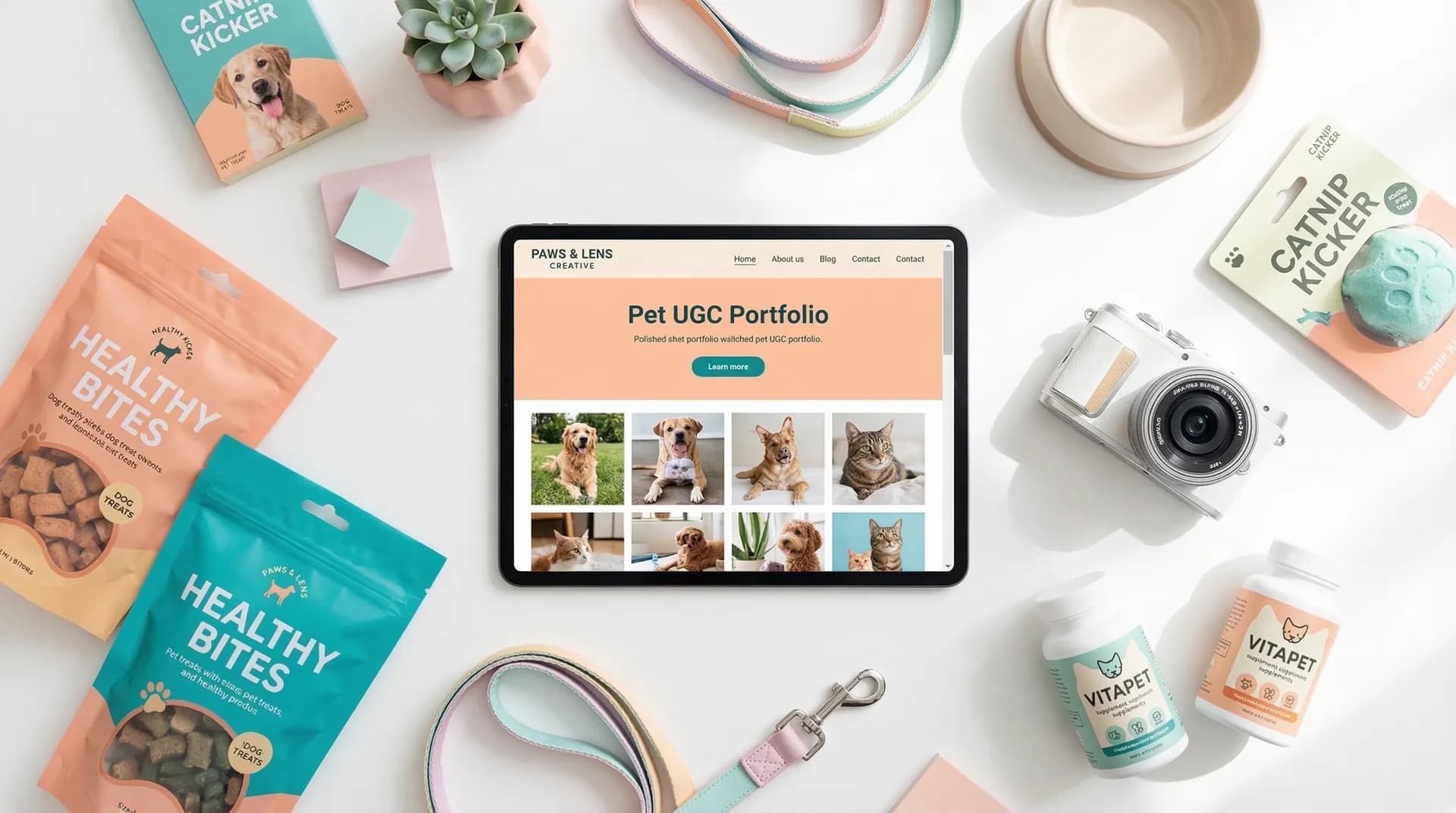
How to build a pet UGC portfolio and land animal brand deals
Here's exactly how to build a pet UGC portfolio that attracts animal brands—what to include, which companies to target, and what content types convert best.

Americans spent $147 billion on their pets in 2023. That number is growing every year. And virtually every brand in that space — from raw food startups to squeaky toy DTC brands — needs video content that doesn't look like a commercial.
That's you. If you have a dog, cat, rabbit, reptile, or literally any animal, you're sitting on a portfolio asset most UGC creators don't have: a co-star who can't fake enthusiasm.
But I see pet creators make the same mistake constantly. They build generic portfolios that could belong to anyone. No clear niche, no strategic brand targeting, no understanding of what pet brands actually want to buy. This post fixes that.
What a pet UGC portfolio actually needs to show
Most advice on building a UGC portfolio applies here, but the pet niche has specific requirements brands care about. You're not just showing you can create content — you're showing you can get an unpredictable animal to participate in a brand moment on camera.
Your opening section should answer three questions immediately:
- What animal(s) do you work with?
- What types of pet products do you cover?
- What does your content feel like?
A brand manager at Zesty Paws or The Farmer's Dog shouldn't have to scroll past three paragraphs to figure out if you work with dogs. Put your pet front and center. Literally. Your hero image or reel should feature your animal in the first three seconds.
Don't hide your niche trying to seem versatile. "Dog and cat content creator specializing in food, supplements, and enrichment products" is more hirable than "content creator for all brands."
The six content types that convert best for pet brands
This is where most pet creators leave money on the table. They make cute content. Cute doesn't always convert. Here's what brands are actually buying:
1. First reaction / unboxing The moment your dog hears the treat bag crinkle or your cat sniffs a new toy for the first time — that's gold. Brands can't fake genuine animal reactions. This is your biggest advantage over studio footage. Capture it in high framerate so you can slow it down.
2. Before / after Dental chews, flea treatments, grooming products, anxiety supplements. Show the problem (dog scratching, cat with plaque buildup, anxious behavior) then the solution. These work incredibly well for conversion ads because the narrative arc is built in.
3. Problem / solution tutorial "How I finally got my dog to take his pills" or "three ways I use this lick mat to calm my anxious cat." Brands running these as paid ads see strong engagement because the headline targets a real pain point. Chewy, PetSmart, and supplement brands use this format constantly.
4. Day-in-the-life integration The product appears naturally during your pet's routine — not held up to camera and described like an infomercial. Morning walk featuring a harness. Feeding time featuring the food brand. Nap time featuring the new bed. Low-key, high-trust.
5. Comparison / review "I tried five dog foods for a month. Here's what happened." Brands sometimes commission these even when they're not guaranteed a positive outcome, because the format has credibility. You'll want written approval from the brand before filming competitors, but it's a legitimate format that performs well organically.
6. Educational content with product integration "Why I switched my senior dog to a joint supplement" works for supplements and vet-recommended products. You're providing value first, and the brand gets mentioned as part of the solution — not the pitch.
Your pet UGC portfolio should show at least three or four of these formats. Don't include six videos all doing the same thing.
Which brands to target — and how to find them
The pet industry isn't just PetSmart and Purina. The most accessible brand deals for UGC creators are in the mid-tier DTC space. These companies have serious ad budgets, no internal content team, and a desperate need for authentic footage.
High-opportunity categories right now:
- Fresh/raw pet food: The Farmer's Dog, Ollie, Spot & Tango, Wild Earth, Nom Nom. These brands are spending heavily on digital ads and need real feeding reactions, not glossy studio shots.
- Supplements: Zesty Paws, VetriScience, Nutramax, Pet Honesty. CBD and joint support products especially need UGC because they can't make strong health claims in polished ads — authentic testimonial style content sidesteps that.
- Toys and enrichment: Kong, West Paw, Outward Hound, Nina Ottosson. Enrichment is a booming category and brands want footage of real animals engaging with the products.
- Subscription boxes: BarkBox, KitNipBox, PupJoy. These are designed for unboxings. They will pay you to film your pet opening a box. This is not a trick.
- Cat furniture/accessories: Tuft & Paw, Catastrophic Creations, Hepper. Cat furniture is photographed and filmed badly 90% of the time. If you can make it look good with a real cat actually using it, brands notice.
- Outdoor/adventure gear: Ruffwear, EzyDog, Kurgo. If your dog hikes or swims, this is a premium niche. Adventure pet content commands higher rates.
For outreach, check each brand's paid ads on Meta's Ad Library. If they're running a lot of raw, creator-style video ads, they're already buying UGC. Pitch them directly. If their ads all look like TV commercials, they might not be there yet — still worth a shot, but expect more education in your pitch.
Don't overlook Chewy. They have an active UGC program and are one of the largest pet retailers online. Getting a Chewy deal on your portfolio validates you immediately to smaller brands.
How to actually film content when your pet won't cooperate
No one tells you this part. Most pet UGC tutorials show perfect, well-behaved animals responding on cue. Real life is messier.
A few things that actually work:
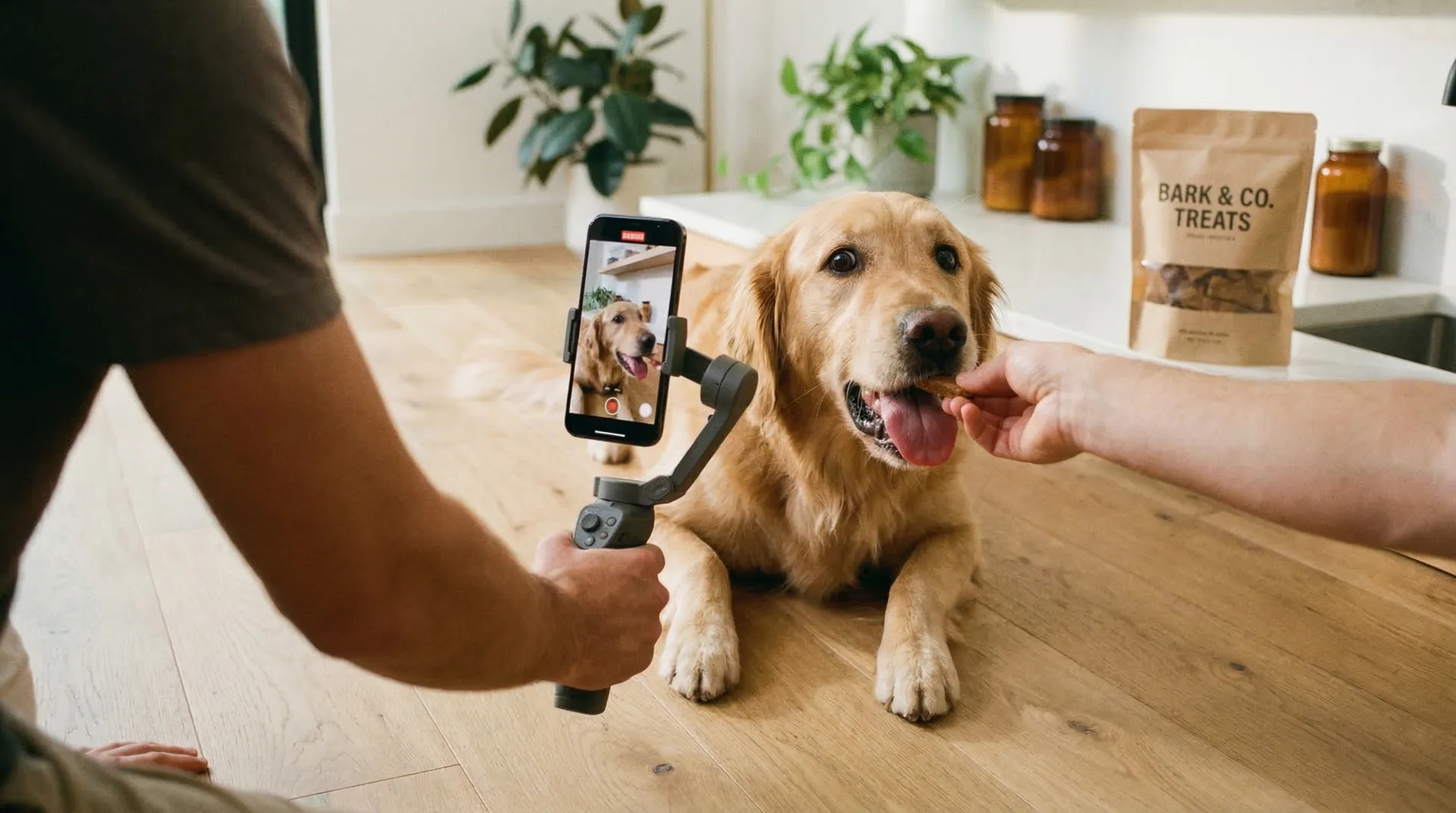
Film at your pet's eye level. Get on the floor. This single change makes everything look more immersive and premium. Brands notice immediately when someone bothers to do this.
Use natural light, not flash or ring lights. Flash terrifies most animals and ring lights look weird reflected in their eyes. A window on a cloudy day is your best friend.
Keep sessions under 10 minutes. Animal attention spans are short, and forced content reads as forced. Three good takes are worth more than 30 mediocre ones.
Have a helper off-camera. The person holding the treat above your camera lens is responsible for half your best shots. If you shoot solo, use a clip-on treat holder or tape a treat to your camera.
Film way more than you need. You might need 40 minutes of raw footage to get 90 seconds of usable content. That's normal. Build it into your pricing — check out how to price your UGC work if you're not accounting for pet content's longer production time.
Structuring your pet portfolio pages
Your portfolio template should follow standard UGC structure, but with a few pet-specific additions:
Your animal's bio matters. Name, breed, age, and personality in one sentence. "Mochi is a three-year-old shiba inu with strong opinions about dinner time." This humanizes the work and tells brand managers exactly what animal they're getting.
Show variety of angles and formats. Close-up of the animal's face, wide shot with product, POV/overhead, slow-motion reaction. Brands want to know you can execute a brief, not just one style.
Include at least one "hero" piece — a longer-form video (60-90 seconds) that demonstrates full storytelling ability. Many pet brands use 15-second clips for ads, but they want to know you can structure a narrative before they trust you with a campaign.
Label spec work clearly. If you bought a bag of Purina Pro Plan and filmed your dog eating it to create portfolio pieces, label it "spec work" or "self-initiated." Brands respect creators who are proactive about building their portfolio — you don't need to hide it. Check our portfolio examples post to see how other creators handle spec work labeling.
Add your animal's "platforms." If your pet has its own Instagram or TikTok, include that even if it's small. American Pet Products Association data shows that 65% of pet owners share pet content on social media. Brands know their customers follow pet accounts — any social proof from your animal's presence adds weight.
Rates and pitching for pet brand deals
Pet brands tend to pay in the middle range for UGC — above food/beverage but below beauty and tech on average. Expect $150–$400 per video for smaller DTC brands, $400–$800 for established brands or if you include usage rights.
Always pitch the value of the animal's genuineness explicitly. You're not just a camera operator — you have a co-star who can't be paid to fake enthusiasm. That's worth something.
Read our UGC rates guide for videos and photos for exact numbers by format and deliverable. And once you have rates figured out, make sure they're visible inside your portfolio — here's how to display them without scaring brands off.
Frequently Asked Questions
Do I need a popular pet social media account to land pet UGC deals?
What animals work best for pet UGC portfolios?
How many portfolio pieces do I need before pitching pet brands?
Can I use spec work in a pet UGC portfolio?
Which pet brands hire UGC creators most actively?
How do I price pet UGC content?
Related reading
- How to build a UGC portfolio that wins brand deals
- UGC portfolio template: the exact sections brands want
- 15 UGC portfolio examples that actually land brand deals
- How to display your UGC rates inside your portfolio
- How to build a UGC portfolio with no experience
- Best UGC portfolio website options (free & paid)