TikTok UGC rates: how to price your ad creatives
A no-fluff breakdown of TikTok UGC rates by creator tier, covering Spark Ads pricing, paid ad creative deliverables, and how to stop leaving money on the table.

A brand DMs you. They want a TikTok video — product demo, native feel, scroll-stopping hook. They're offering $75. You look at the brief: three revisions, 30-second video, full usage rights, Spark Ads authorization. You need three hours to shoot and edit this properly.
That $75 suddenly feels insulting.
This is the scenario playing out in thousands of creator inboxes every week, and it happens almost entirely because creators don't know what TikTok UGC rates should actually look like. The platform has its own quirks — Spark Ads, paid ad creative formats, higher performance expectations — that change the pricing equation compared to other channels.
So let's get specific.
TikTok UGC rates: why the platform changes things
TikTok isn't Instagram. Brands aren't just repurposing your content for a grid — they're running it as paid ads, often with Spark Ads, sometimes as dark posts through their own account. The production expectations are different too. A 7-second hook that stops a thumb mid-scroll is a skill. So is writing copy that converts inside a caption.
When you're pricing TikTok UGC, you're not just selling a video. You're selling:
- A native-looking ad creative that bypasses ad fatigue
- Platform-specific knowledge (hooks, pacing, sound selection, trending formats)
- The right to use your face, voice, and likeness in paid media
That last one is the piece most creators underprice. The moment a brand runs your content as a paid ad — even through Spark Ads on your own account — they're extracting commercial value from your work. That deserves compensation beyond the base creative fee.
If you haven't read our breakdown of UGC creator salary & rates: what to charge in 2026, start there for the broader picture. This post focuses specifically on TikTok.
Rate benchmarks by creator tier
These ranges reflect what I see brands paying and what creators are actually commanding as of early 2026. Not aspirational. Not bottom-of-barrel platforms that pay $30 a video. Real rates from real deals.
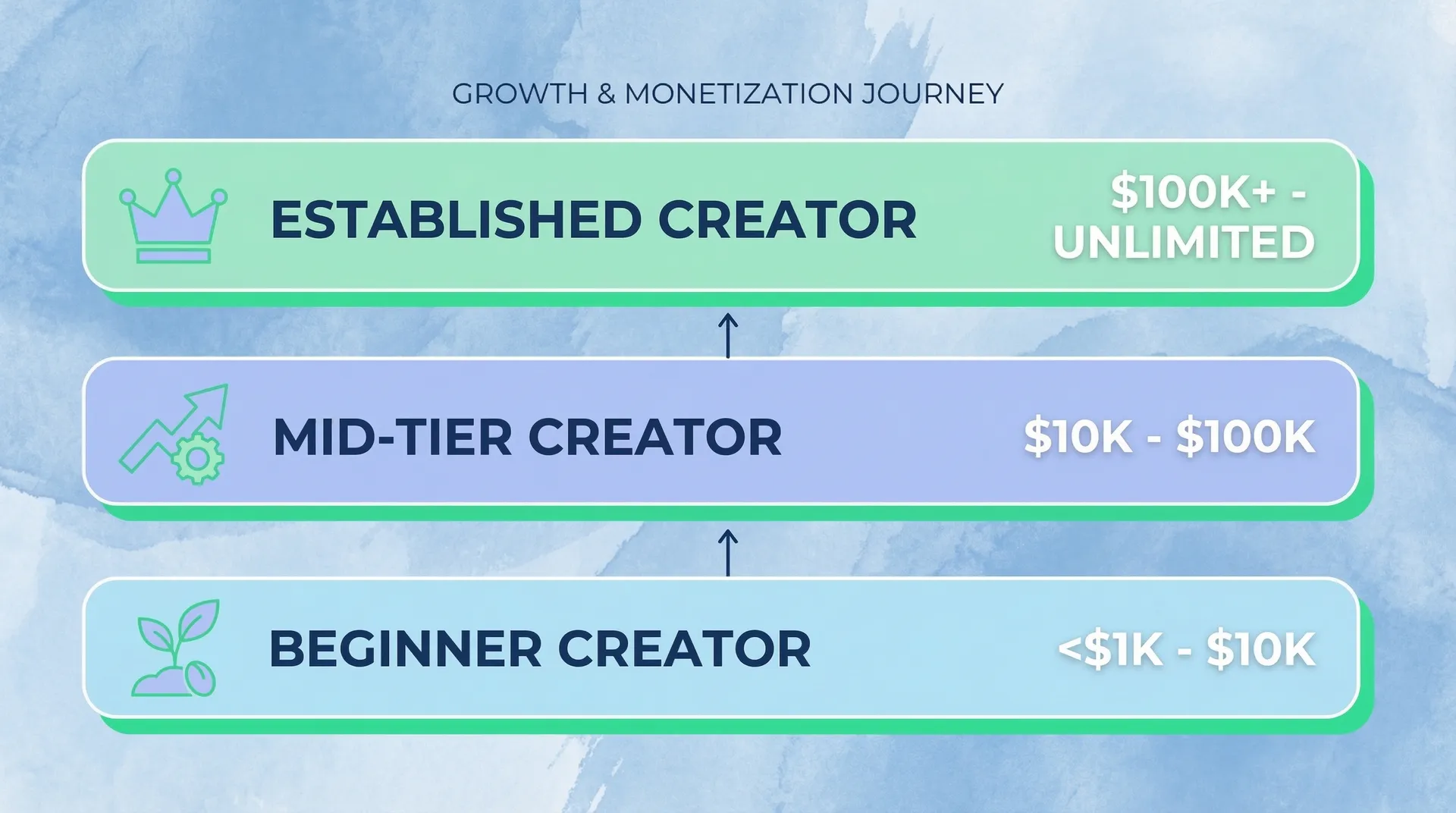
Beginner (0–6 months, portfolio building)
$75–$150 per video
At this stage you're trading some revenue for portfolio assets and proof of concept. That's fine — briefly. A $100 rate for a clean 30-second TikTok with one round of revisions is reasonable when you're new.
What it should include: one deliverable, one revision, no usage rights beyond organic posting. The moment a brand asks for Spark Ads authorization or paid ad usage at this price point, push back. That changes the deal.
Don't stay here past your first three or four paid pieces. Brands who want endless beginner rates are not good long-term clients.
Mid-tier (6 months–2 years, consistent portfolio)
$150–$400 per video
This is where most working TikTok UGC creators land. You've got case studies. You know how to write a hook. You can turn around work without hand-holding.
At $200–$300 you should be delivering: one final video (30–60 seconds), one revision included, organic usage only. Usage rights or Spark Ads authorization layer on top. Don't bundle those in at no charge.
At $350–$400 you're commanding this for faster turnaround, proven performance data, or niche expertise (skincare, supplements, tech, food — verticals with specific audiences).
Established (2+ years, performance track record)
$400–$800+ per video
Once you can show a brand that your ad creatives have driven measurable ROAS, the pricing conversation changes entirely. You're not selling a video. You're selling a proven formula.
$500–$600 is a reasonable ask for a 60-second performance-focused TikTok with one hero cut and one shorter variation. Full usage rights and Spark Ads access would push this to $700–$900+ depending on the brand's ad budget.
Some established creators in high-converting verticals (finance, weight loss, SaaS) are charging $1,000–$1,500 per deliverable for raw ad creative. That's not the norm, but it's not fantasy either.
Spark Ads pricing: charge separately for this
Spark Ads is TikTok's format where a brand runs paid promotion through your actual organic post — your handle, your profile picture, your comments. That's different from them downloading your video and running it as a dark ad.
With Spark Ads, your account takes the performance association. Your audience sees the comments. Your brand equity is attached to whatever message the advertiser is pushing.
Charge $75–$200 on top of your base rate for Spark Ads authorization, depending on how long they need access (30 days, 60 days, or 90 days are the standard windows). TikTok's Spark Ads setup requires you to grant authorization through the app — make sure any contract specifies the exact duration and that authorization expires automatically.
If a brand is asking for "evergreen" Spark Ads access (no defined end date), that's a licensing deal, not a one-time fee. Price it like one — or don't agree to it at all.
Usage rights: where the real money is
Usage rights pricing for TikTok follows the same logic as other platforms but brands often try to bury it in vague contract language like "brand may use content across all owned channels." That phrase includes paid TikTok ads, Meta retargeting, YouTube pre-rolls, email, and whatever they dream up next.
As a baseline, for TikTok-specific paid ad usage, add:
- 30-day paid usage: +25% of base rate
- 90-day paid usage: +50% of base rate
- 6-month paid usage: +75–100% of base rate
- 12-month or perpetual: At least double your base rate, often more
If you want to learn how to structure these properly, the UGC usage rights: how to price licensing fees post covers the full framework.
What pushes TikTok UGC rates higher
A few variables that justify charging at the top of any range — or above it:
Fast turnaround. Brands needing content in 48–72 hours should pay a rush premium. 25–30% on top of base is standard for expedited delivery.
Multiple variations. A/B testing is massive in TikTok paid ads. If a brand wants two or three cuts of the same concept (different hooks, same product), each variation is a deliverable. Some will push for a "bundle discount" — you can offer 10–15% off for three+ variations, but don't give them three videos for the price of one.
Niche authority. If you have a genuine following or demonstrated expertise in a specific category, that credibility transfers to the ad creative. A creator who's been posting about gut health for two years making a probiotic ad is worth more than a generalist, even with equal follower counts.
Script creation. Some UGC briefs are so detailed they practically write the video for you. Others ask you to concept and script it from scratch. If it's the latter, add a creative fee — $50–$150 depending on complexity — or build it into a slightly higher base.
Performance data. If you have CTR, conversion, or ROAS data from past campaigns, screenshot it, put it in your media kit, and quote accordingly. Brands will pay a premium for reduced risk.
The deal-breakers to watch for
There are a few things I see in TikTok UGC contracts that should either change the price or kill the deal:
White-labeling to third-party brands. Some agencies buy UGC to resell to their clients. Your video ends up on five different brand accounts. If a brief mentions "resale" or "sublicensing to clients," your rate needs to reflect that — or say no.
Exclusivity. If a brand wants you to not post for competitors for 30, 60, or 90 days, that's exclusivity. It costs money. Add 20–50% depending on how competitive your niche is and how long the window is.
Unlimited revisions. Cap revisions in every agreement. Two rounds is standard. Each additional round is $50–$75. Brands with no internal creative direction will revise you into oblivion otherwise.
For a full rate card structure that addresses all of this, check out how to build a UGC rate card that wins brand deals.
Don't race to the bottom on TikTok
The platforms paying $20–$50 per TikTok video exist. So do the brands DMing creators with "we'll pay in exposure." Both are traps.
TikTok ad creative is a genuine skill. The brands running performance campaigns on TikTok know this — that's why they're shifting budget away from traditional influencer placements toward raw UGC that actually converts. You're providing something with real commercial value.
Price accordingly. Start at rates for beginners if you're new, build up as you gather proof, and never bundle usage rights into your base rate for free. The moment you train brands to expect those for nothing, you've set the ceiling for every deal you'll do with them.
The worst-paying clients aren't the ones with small budgets. They're the ones who don't understand what they're buying. Part of your job is making sure they do.
Frequently Asked Questions
What are typical TikTok UGC rates in 2025?
How much extra should I charge for TikTok Spark Ads authorization?
Are TikTok UGC rates different from Instagram UGC rates?
Do I charge separately for usage rights on TikTok UGC?
What should a TikTok UGC contract include?
Can beginners charge higher TikTok UGC rates without a big following?
Related reading
- UGC creator salary & rates: what to charge in 2026
- How much to charge for UGC: beginner rates breakdown
- UGC usage rights: how to price licensing fees
- How to build a UGC rate card that wins brand deals
- UGC creator rates: what to charge for videos and photos
- Why brands are shifting budgets from influencers to UGC creators