
How to build a travel UGC portfolio for tourism brands
Learn what hospitality and tourism brands actually want in a travel UGC portfolio — content types, aesthetics, and structure that land real deals.

A Marriott brand manager told me something I've never forgotten: "We get 200 DMs a week from travel creators. Maybe 3 show us content we'd actually use in a campaign."
That stuck. Because I've seen so many gorgeous travel portfolios that still don't land deals. Stunning drone shots over Santorini. Golden hour in Machu Picchu. The brand opens the portfolio, spends 45 seconds on it, and moves on. No reply.
The problem isn't quality. It's positioning.
A strong travel UGC portfolio isn't about proving you've been to impressive places. It's about proving you can produce content that does a specific job — drives clicks, fills hotel rooms, inspires bookings. That's a different skill entirely from documenting your own travels. And most creators never make the distinction.
Here's how to build a travel UGC portfolio that tourism and hospitality brands actually respond to.
What travel brands are really buying with a travel UGC portfolio
Before you shoot a single frame, understand what you're actually selling.
Hospitality brands — hotels, resorts, booking platforms, airlines, tour operators — buy UGC for two things: paid ads and organic social. The requirements are different.
For paid ads: Clean, distraction-free visuals. Short clips (6–15 seconds), a strong hook in the first 2 seconds, clear product visibility. A creator walking into a hotel room and reacting genuinely to the space. A 10-second spa pool clip in natural light. Brands A/B test these constantly, so they want volume and variety, not one masterpiece.
For organic social: Content that feels native to their feed. A boutique eco-lodge wants a completely different aesthetic than a Vegas casino resort. Your job is to show you can adapt — not just produce one consistent "your style."
The mistake I see constantly? Creators showing only their personal travel content. Their story. Their face. Their journey. Brands need content that centers the destination or property, not the creator.
When I've spoken to brand managers at hotel groups and tourism boards, the feedback is consistent: they want evidence that you understand the difference between documenting your vacation and producing content for a brand's audience. It's not a subtle distinction. It shapes everything about how you shoot, write, and edit.
If you're building your portfolio from scratch, start with the fundamentals in how to build a UGC portfolio that wins brand deals — then layer the travel-specific strategy on top.
The content types that actually book travel deals
Not all travel content pulls equal weight with brands. Some formats are requested constantly. Others are barely used.
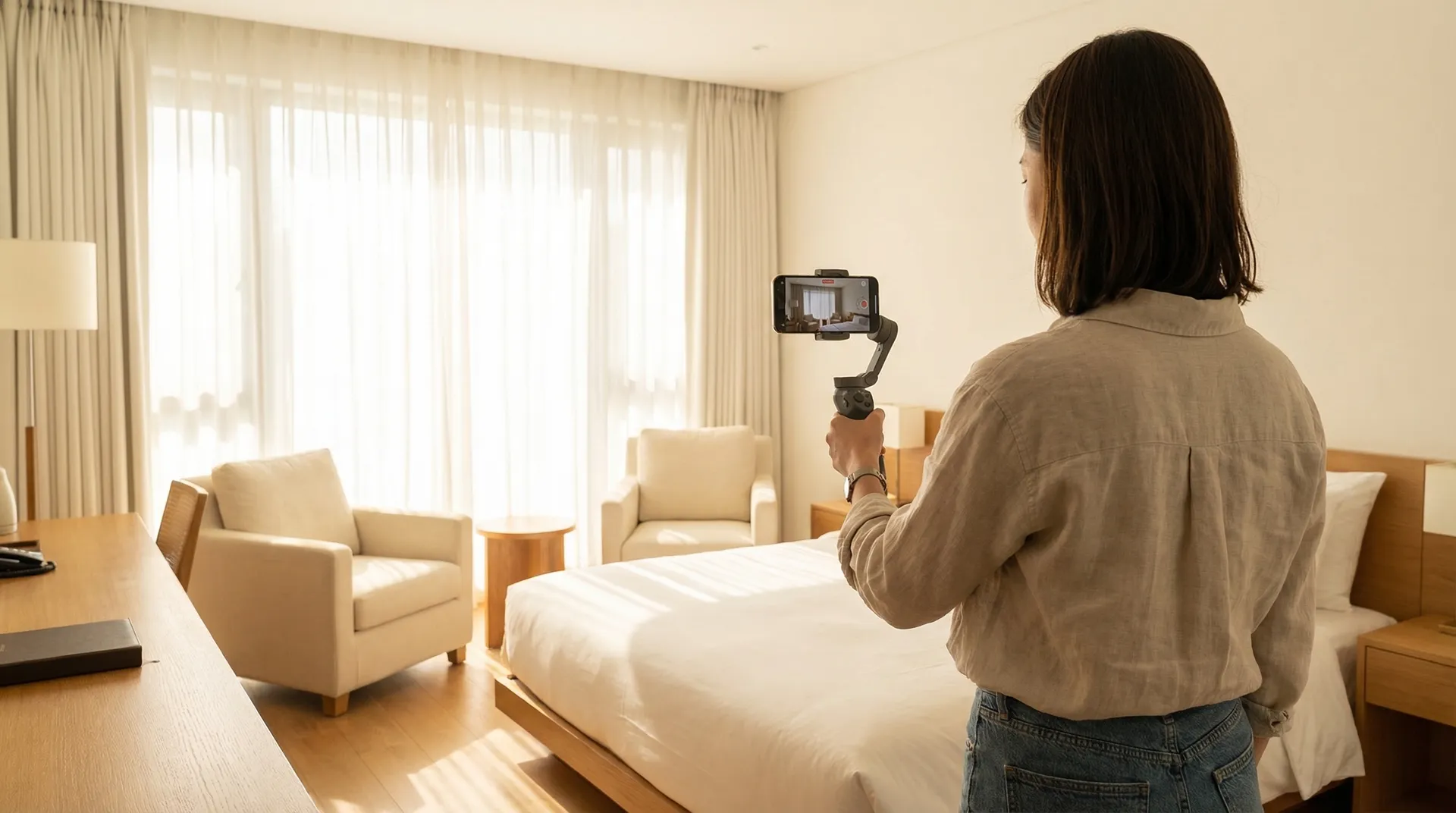
Room tours and property walkthrough videos. Bread and butter of hotel UGC. A 30–90 second video moving through a room — bed, bathroom, view, key amenities — narrated naturally. Brands use these in ads and on social constantly. If your portfolio doesn't have 2–3 of these, you're missing the most-requested format in the category.
Reaction and arrival moments. Walking into a lobby for the first time. Opening curtains to an unexpected view. Arriving at a gate. These perform well because they're emotionally relatable. Every traveler knows that feeling. Brands want to bottle it for their ads.
Local experience content. Food, markets, guided tours, cultural scenes. Tourism boards and destination marketing organizations pay specifically for this — content that makes someone want to go somewhere, not just want to stay at a specific hotel.
Product-integrated travel shots. Luggage at check-in, sunscreen on the beach, a travel app open at the airport. If you've done any travel-adjacent product UGC, include it. It shows you understand integration without making content feel like a blatant ad.
Voiceover-led explainers. "Three things I'd tell anyone staying here for the first time." These work exceptionally well as mid-funnel ad content. They show you can script and deliver a clear, useful message — which is exactly what ad buyers need.
One thing I'd flag: audio quality matters as much as your visuals in travel UGC. Hotel rooms have tricky acoustics. If your room tour sounds echoey or flat, it undercuts the whole clip. Brands notice immediately.
You don't need to travel internationally to build a credible travel UGC portfolio. Film spec content at a local hotel, a day-use booking, or even a well-styled Airbnb. A well-produced clip from an $89/night downtown hotel beats a shaky iPhone video from Bali every single time.
Destinations and aesthetics: what converts vs what doesn't
Here's the uncomfortable truth: "aspirational" doesn't mean "useful to a brand."
They don't need more Santorini sunset content. They have it. What they're consistently short on is content that looks native to their specific brand world — whether that's a family-friendly all-inclusive in Cancún, a business hotel near an airport, or a rustic lodge in Vermont.
That said, certain aesthetics do work harder in a travel UGC portfolio:
Neutral, bright interiors. Clean whites, natural light, minimal clutter. This is the base aesthetic for hotel UGC because it's versatile — it adapts to different brand identities without needing heavy post-production. If you can consistently nail this, you're already ahead of most creators.
Golden hour outdoor content. Morning and late-afternoon light makes destinations look genuinely beautiful without expensive editing. Brand managers know it takes real skill to capture it reliably, so it signals production quality without being showy about it.
Authentic local scenes. Not staged, not over-filtered. Real markets, real food, real people. Tourism boards and DMOs pay specifically for content that feels lived-in. According to Phocuswire's research on travel marketing trends, authenticity is consistently the top attribute destination marketers look for in creator content.
The "relatable traveler" angle. You don't need to be glamorous. You need to be convincing. A genuine reaction to an amazing breakfast spread is worth ten perfectly composed drone shots to a brand running direct response ads. Research from the World Travel & Tourism Council consistently shows that peer-level content outperforms polished influencer content in booking conversion.
What doesn't pull its weight: heavily filtered content, celebrity-style posed shoots, and anything that puts your personal brand story above the destination. If the content screams "my personal feed," it's much harder for a brand to deploy it.
How to structure your travel UGC portfolio
Structure matters as much as content quality. A brand manager spending 90 seconds on your portfolio should be able to immediately answer: "Can this person produce what I need, and what does it cost?"
Lead with a short reel — 60–90 seconds — of your best travel-specific clips. Cut fast, vary shot types, show range. This is the first thing most brand managers click, and many won't go further if it doesn't grab them.
Then organize your content by format or use case, not by destination. A page titled "Room Tours" is more useful to a hotel brand than a page titled "My Bali Trip 2024." It shows you think like a content producer, not a vacationer.
Include at least one branded spec example. Film a "campaign" for a hotel you actually stayed at — write a mock brief, deliver 3–5 pieces of content as if it were real client work. Label it spec. Brands don't care that it wasn't paid. They care that your process looks professional and that the output matches what they'd brief.
For platform choices, this breakdown of UGC portfolio websites covers what works specifically for video-heavy travel portfolios, including load speed and mobile display — both of which matter more than most creators realize.
Include your rates. A clear rates section signals that you're professional and eliminates the back-and-forth that kills deals before they start. This guide on displaying your rates inside your portfolio covers how to present them without scaring off smaller regional brands.
For the full layout that converts browsers into deal enquiries, the UGC portfolio template guide walks through the exact sections that move brands from "interesting" to "let's work together."
Many tourism boards and DMOs have formal creator and media programs — hosted trip applications, content grant opportunities, press trip schemes. Before cold outreach, check the official tourism website of your target destination. Most have a "Media" or "Creator" section with application details. Getting a hosted trip gives you portfolio content and a brand relationship at the same time.
Getting your first hotel or tourism brand deal
The question I hear most from travel UGC creators just starting out: "How do I get brand deals without prior brand deals?"
Spec content. That's the answer. It works faster than most people expect.
Pick a hotel you can access — locally, a day-use booking, or a budget overnight — and produce a full mini-campaign for it. Write a mock brief yourself. Film 3–5 deliverables. Edit them as if they were real client assets. Build a short case study page around it. This is exactly the kind of content that gets a "we'd love to work with you" reply instead of silence.
Start with accessible brands, not the Marriotts of the world. Local boutique hotels, regional tourism boards, travel-adjacent product brands (luggage, packing cubes, travel insurance apps) — these brands have real budgets, shorter decision cycles, and are much more willing to work with newer creators. Landing your first UGC campaign has the full playbook for exactly this stage of building out.
And before you finalize your portfolio, spend an hour looking at what strong UGC portfolios actually look like. Especially in travel. Seeing real examples — what they include, how they're organized, what the best ones have in common — is worth more than any framework I can hand you.
The travel category has real money in it. Brands are actively shifting budgets toward UGC creators and away from traditional influencer partnerships precisely because UGC is more cost-effective and easier to test. The demand is there. The opportunity is real. You just need a portfolio that speaks the language brands actually understand.
Frequently Asked Questions
Do I need to travel internationally to build a travel UGC portfolio?
What types of brands hire travel UGC creators?
How many samples do I need in a travel UGC portfolio?
Do I need a large social following to land travel UGC deals?
What's the difference between a travel influencer and a travel UGC creator?
How much do travel UGC creators charge per video?
Related reading
- How to build a UGC portfolio that wins brand deals
- UGC portfolio template: the exact sections brands want
- 15 UGC portfolio examples that actually land brand deals
- Best UGC portfolio website options (free & paid)
- How to display your UGC rates inside your portfolio
- How to land your first UGC campaign as a creator