
UGC creator salary & rates: what to charge in 2026
Real UGC creator salary ranges and pricing data broken down by content type, experience level, and usage rights — so you stop underselling your work.

The first time a brand slid into my DMs asking what I charged per video, I said "$75" and they replied "sounds good" within 30 seconds. No negotiation, no hesitation. That instant yes told me I'd left real money on the table.
UGC creator salary is one of the most searched — and most misunderstood — topics in the creator economy right now. There's no HR department, no pay scale, no union rep. Most creators just find a Reddit thread, pick a number that feels "not too greedy," and go with it. Then they watch a brand spend $20,000 running their video as an ad for six months while they pocketed $150.
This post breaks down what UGC creators actually earn, what the real rate ranges look like by content type and experience, and how usage rights can — and should — change your pricing completely.
UGC creator salary: what the numbers actually look like
First, let's get honest about what "salary" even means here. Most UGC creators are freelancers. There's no fixed paycheck. What you earn is entirely a function of how many campaigns you land, at what rate, with what terms.
That said, here's how income actually stacks up across different levels of commitment:
Part-time (5-10 campaigns/month): $500–$3,000/month. This is the reality for most people starting out or doing UGC as a side income. A few brand deals a month at entry-level rates.
Full-time (15-30+ campaigns/month): $3,000–$10,000/month. Creators who've built a portfolio, work across multiple niches, and have started charging proper rates for usage.
Top tier: $15,000–$50,000+/month. This isn't fantasy — it's what happens when creators with strong conversion track records start charging for paid ad usage, sign retainer agreements, and work with larger DTC brands running serious ad budgets.
You'll see figures on sites like ZipRecruiter showing UGC creator salaries around $40,000–$80,000/year, but that data is messy — it blends full-time agency roles with freelance gigs and doesn't reflect usage rights at all. Don't anchor to those numbers.
The brands paying the most aren't paying for your follower count. They're paying for content that converts. That's the whole reason brands are shifting budgets from influencers to UGC creators — it's performance, not reach.
UGC pricing by content type
Not all content is created equal, and you shouldn't price it that way.
Short-form video (most in demand)
This is the bread and butter. Vertical video for TikTok, Instagram Reels, and YouTube Shorts.
| Format | Beginner | Intermediate | Pro |
|---|---|---|---|
| 15–30s | $75–$150 | $200–$400 | $500–$1,000+ |
| 30–60s | $100–$200 | $300–$600 | $700–$1,500+ |
| 60–90s | $150–$300 | $400–$800 | $1,000–$2,500+ |
These are base rates for organic social usage — meaning the brand posts it on their own channel. Paid ad usage is a separate conversation (more on that below).
Photo / image UGC
Less requested than video but faster to produce and still valuable — especially for e-commerce brands needing lifestyle imagery.
- Single lifestyle image: $50–$200
- Product flat-lay or detail shot: $50–$150
- Photo bundle (5–10 images): $150–$500
- Full look-book set (15+ images): $400–$1,200
Long-form and scripted video
YouTube-style tutorials, unboxings, or detailed product reviews run $500–$3,000+ depending on length and production complexity. Brands needing Amazon video ads or website hero videos often pay toward the higher end because of the production lift and ongoing commercial value.
How experience level changes your rate
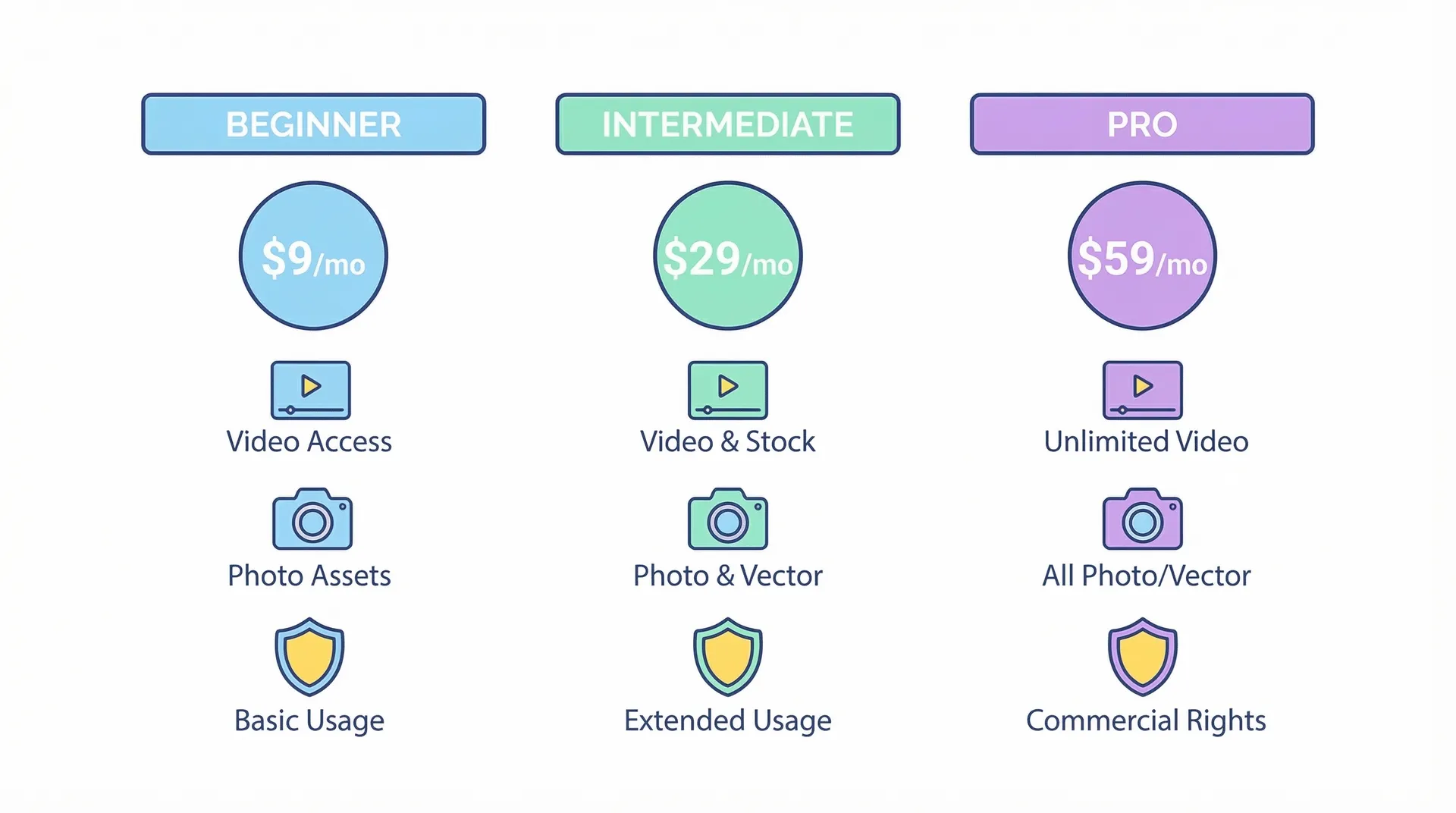
Here's the uncomfortable truth: charging beginner rates when you've been doing this for two years is leaving money on the table. Your rate should evolve with your track record.
Beginner (0–6 months, fewer than 5 campaigns) Charge $75–$200 per deliverable. Your priority right now isn't income — it's building a portfolio that proves your work converts. At this stage, a lower rate gets you reps and testimonials. But don't work for "exposure" or product-only deals. Cash always. Even $50 is a market signal.
Intermediate (6 months–2 years, established portfolio) You should be at $200–$600 per video and raising rates every 3–6 months. You have proof of work. Brands can see you've delivered before. Stop discounting yourself.
Advanced (2+ years, conversion data, niche expertise) This is where rates get interesting. $600–$1,500+ per video for organic, more for ad usage. If you specialize — beauty, supplements, SaaS, fintech — expect premium rates because brands pay more for creators who know their category.
If you don't have a portfolio that reflects your current skill level, that's the first thing to fix. Check our guide on how to build a UGC portfolio that wins brand deals before you send your next pitch.
Usage rights: the multiplier most creators ignore
This is where most creators leave the most money behind. And it's not even complicated once you understand the logic.
When a brand buys your video, the question isn't just "how much to make it?" — it's "how much are you paying to use it, and for how long?"
Organic social only (base rate) Brand posts it on their own social channel, attributed or not. This is what most beginner deals assume by default. Fine as a starting point, but it should always be stated explicitly.
Paid social / dark posts (2–3x base) Brand runs your video as a paid ad on Meta, TikTok, or anywhere else. This is a fundamentally different use case — they're putting ad budget behind your face and voice to drive revenue. A $300 video for organic becomes $600–$900 for paid usage. Non-negotiable.
Whitelisting (add $200–$500+) Brand runs ads from your creator account, not theirs. More reach, more authenticity signal for the algorithm. Charge accordingly, because you're lending your account identity on top of the content.
Exclusivity (add 20–50%) Brand asks you not to work with competitors for a defined period. That has real cost to your business. A 3-month exclusivity clause with a skincare brand should come with a meaningful premium.
Duration A 6-month license isn't a perpetual license. Perpetual usage of paid ad content should cost significantly more than a 12-month term. Structure it that way in your agreements. Creators who land long-term campaigns almost always have usage rights built into their rate cards.
The math on all of this: a brand spending $5,000/month in Meta ad spend on one of your videos is getting a return on your content daily. Your one-time fee is practically rounding error in their ad budget. Act accordingly.
UGC rates by platform
Where the content runs matters because different platforms have different ad economics.
Meta (Facebook/Instagram ads): Highest willingness to pay because the attribution is clear. Brands know exactly what their ROAS is. If your content is running in a performance campaign, you have leverage to charge premium rates.
TikTok Ads: Growing fast as a placement. Brands are allocating serious budget here. Rates are slightly lower than Meta on average but catching up.
YouTube Shorts / pre-roll: Less common for pure UGC but growing. YouTube's ad ecosystem means commercial value is high.
Amazon / e-commerce video: Product videos for Amazon listings, landing pages, or Shopify PDPs. These are often evergreen — running for years without refresh. That should be priced into your rate. $300–$1,000+ is typical, with perpetual usage being the norm for this category.
Brand website / sales pages: High commercial value. If your video is living on a brand's homepage or inside a checkout funnel, it's working harder than a social post. Charge for that.
How to set your UGC pricing without underselling
A framework that actually works:
Step 1: Set your base rate by content type and format. Use the ranges above to position where you are right now — honest with your experience level.
Step 2: Layer in usage. Start every negotiation by clarifying what the deliverable is and where it will run. Don't quote a rate before you know the usage.
Step 3: Build packages. Brands with ongoing needs love bundles — 4 videos/month, 8 videos/month. Retainers give you predictable income; brands love the commitment and lower per-unit cost. Win-win.
Step 4: Raise rates every quarter. If every brand says yes immediately, you're undercharging. Some friction is healthy. Aim for a 70-80% close rate on your quoted rate — if it's 100%, you're too cheap.
Step 5: Don't compete on price. There will always be a creator willing to do it for $30. That's not your market. Your market is brands who know that cheap content performing poorly costs more than good content at a fair rate. Position yourself there.
Quality of output matters enormously in this calculus. If your audio is bad, brands won't rehire regardless of price. Make sure your production baseline is solid — good lighting, clean audio, proper framing. Our UGC video production guide covers the technical side if you need a refresher.
Usage rights are not a bonus line item you add if you remember. They should be the first thing you clarify in every deal. "Where will this run and for how long?" — ask it before you quote anything.
What about the "UGC creator job" path?
Some platforms and agencies hire UGC creators as part-time or full-time contributors. These roles typically pay $35,000–$65,000/year with consistent volume but lower per-piece rates. If you like stability and guaranteed workflow, this can be a good on-ramp. If you want income ceiling, freelance is the path.
There's also a third model: working with a marketplace platform that connects you to brand campaigns at negotiated rates. The margins are lower but the deal flow is higher. Worth exploring when you're starting out and need volume to build your portfolio and reputation.
Frequently Asked Questions
What is the average UGC creator salary per year?
How much should a beginner UGC creator charge per video?
What's the difference between UGC rates for organic vs paid ads?
How do UGC creators actually get paid?
Can you make a full-time income as a UGC creator?
How often should UGC creators raise their rates?
Related reading
-
How to land UGC campaigns as a creator in 2026 — find the brands, write the pitch, close the deal
-
How to build a UGC portfolio that wins brand deals — what brands actually look for before they hire
-
Why brands are shifting budgets from influencers to UGC creators — the demand-side story that explains why rates are rising
-
UGC video production: your complete beginner's guide — produce content brands want to pay for