15 UGC portfolio examples that actually land brand deals
I've reviewed hundreds of UGC creator portfolios. These 15 ugc portfolio examples show exactly what wins paid brand partnerships — and what doesn't.

I've looked at well over a thousand UGC creator portfolios through Crelio. Most of them are forgettable. A few of them are genuinely impressive. And the gap between the two isn't talent — it's presentation.
Brand managers reviewing your portfolio are spending maybe 90 seconds on it before deciding. What they need to see, feel, and understand in that window is very specific. The portfolios that get ignored all make the same mistakes. The ones that book deals consistently share a handful of traits.
Below are 15 ugc portfolio examples organized by the strategy behind them. For each one, I'll tell you exactly what makes it work — so you can steal the approach, not just the aesthetic.
What actually separates the portfolios that land ugc portfolio examples worth studying
Before the examples: here's the single biggest thing I see missing from most creator portfolios.
They show what the creator made. They don't show what it did.
A brand doesn't buy content. They buy outcomes. They want to know your video drove saves, your demo got shared, your testimonial format converts in paid ads. If your portfolio is just a reel of your prettiest work, you're asking a brand to imagine the ROI. The best portfolios make the ROI obvious.
Also — and this is important — brands know UGC is replacing traditional influencer content. They're looking for creators who get that. Reading why brands are shifting budgets from influencers to UGC creators will give you the mindset context you need to frame your portfolio the right way.
With that said, here are the examples.
1. The niche-first portfolio
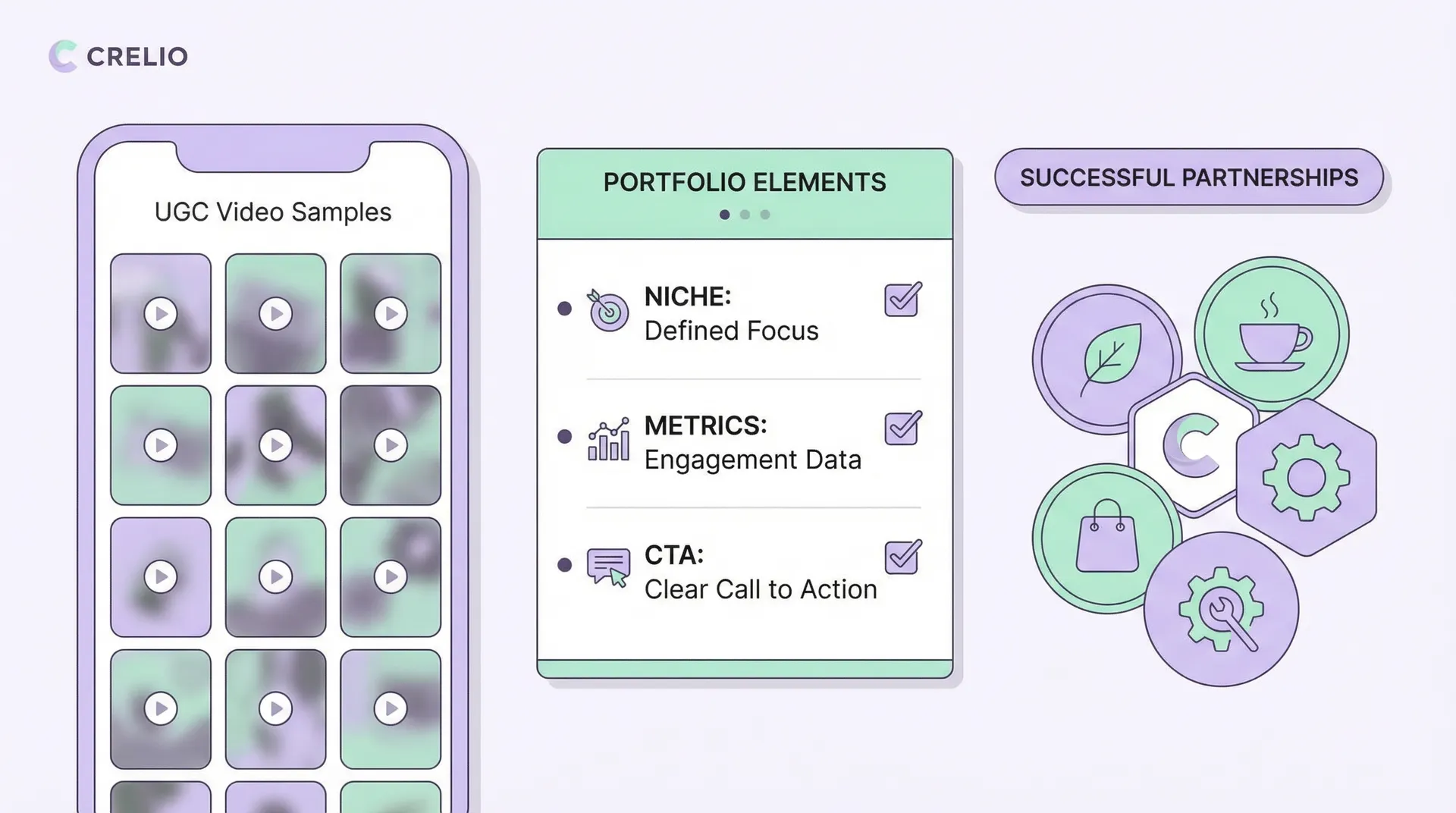
The example: A creator whose entire portfolio covers one category — skincare. Every video is either a product demo, a morning routine, or a before/after. Brands in her niche get it immediately.
Why it works: Specificity signals expertise. A skincare brand manager sees someone who understands their customer. They don't need to wonder if you "get" the space. You've already proven it.
The pattern: Pick a lane (wellness, pet products, kitchen tools, supplements) and build every portfolio piece around it. Even if you can do other categories, lead with the one you own.
2. The metrics-forward portfolio
The example: Opens with a stats section. 47 brand campaigns delivered. Average hook retention: 72%. Organic reposts on paid content: above benchmark on 3 of 5 recent deliverables.
Why it works: Most creators have zero numbers in their portfolios. Any creator who shows up with data immediately reads as more professional — even if the numbers are modest. Brands are used to asking for performance data and being ignored. Give it to them upfront.
The pattern: Track every deliverable. Screenshot the results. Retention rate, shares, saves, ad performance if the brand shares it back. Build that into a one-page summary at the top of your portfolio.
3. The platform-specific portfolio
The example: A TikTok-native creator. Every clip is vertical, sub-30 seconds, hook-first, trending audio. No horizontal content anywhere. The whole thing breathes TikTok.
Why it works: Brands looking for TikTok creators want to see you already understand the platform's format. Showing up with a hybrid portfolio of every format says "I can do anything" — which often reads as "I'm not great at anything."
The pattern: If 80% of your work is TikTok UGC, build a TikTok portfolio. Same for Reels, YouTube Shorts, or static UGC for ads. Platform specificity signals that you're native to the environment, not just technically capable.
4. The problem-solution framework portfolio
The example: Each video in the portfolio is structured identically: identify a relatable problem in the first 3 seconds, position the product as the solution, call to action. Like a formula. Brands immediately see how this maps to their ad creative brief.
Why it works: Ad buyers think in frameworks. When your UGC already follows the structure of a high-converting ad, you reduce the mental work required to imagine your content running as paid media. Getting your UGC video production fundamentals right is the prerequisite for this — the brief-ready style only works when the actual execution is clean.
The pattern: Pick 2-3 proven ad copy frameworks (problem-agitation-solution, before-after-bridge, social proof hook) and make one portfolio piece per framework. Show you can execute multiple approaches.
5. The vertical niche + platform combo
The example: Pet products on Instagram Reels. Every clip is shot in good light, starring a dog, focused on one product category. Caption style is consistent. Aesthetic is consistent.
Why it works: This doubles the specificity signal. Not just a pet creator, but a pet creator who knows how Instagram Reels audiences behave. That combination is rare enough that brands in that niche will pay a premium for it.
6. The storytelling portfolio
The example: A creator who structures each piece as a mini-story. Day-in-the-life format with the product woven in naturally. Not a demo — a narrative.
Why it works: Authenticity is the whole value proposition of UGC. Storytelling demonstrates you can create content that doesn't feel like an ad, even when it is one. Brands trying to land creators for their campaigns know this format builds trust with audiences in a way a direct demo never will.
The pattern: Show 2-3 pieces that use narrative structure. This is especially compelling for lifestyle brands, food brands, and anything where the "experience" of the product matters as much as the product itself.
7. The before-after portfolio
The example: Split-screen content showing a product's transformation. Skincare results, kitchen before/after, workout progress. Before-after is one of the highest-converting ad formats that exists.
Why it works: Simple and immediately legible. Anyone reviewing the portfolio understands the format, the outcome, and how it would run as an ad.
8. The deliverables-count portfolio
The example: Features a simple banner at the top — "200+ brand deliverables delivered." Supported by a gallery of logos from past clients.
Why it works: Volume signals reliability. A brand manager worried about working with a new creator is asking: will they actually deliver? That number answers the question before it's asked.
9. The ad-ready testimonial portfolio
The example: Every video is a first-person testimonial, shot straight-to-camera, 15–30 seconds. Hooks vary ("I've been using this for 60 days and..."), but the format is consistent. All of them could run as Facebook ads tomorrow with zero editing.
Why it works: Direct response advertisers specifically look for UGC testimonials they can drop into ad accounts. If your portfolio signals "plug and play," you're selling an outcome, not just content. Building a portfolio that wins brand deals requires understanding which formats brands actually use in paid — and testimonials are always at the top of that list.
10. The unboxing specialist portfolio
The example: A creator who only does unboxings. Every piece captures the genuine first-reaction moment, consistent audio quality, great lighting.
Why it works: Unboxing is one of the most requested UGC formats, especially for e-commerce brands. A specialist will always win over a generalist in a head-to-head pitch.
Note on audio: If you're doing unboxing content, your audio game needs to be clean. Getting your UGC audio right is the difference between a professional delivery and a video that reads as amateur no matter how good the visuals are.
11. The lifestyle integration portfolio
The example: Products integrated into everyday life. Coffee in the morning routine. Supplements during a workout. The product exists in real life, not in a demo vacuum.
Why it works: This is the format that performs best in feed as non-promotional content. Brands running awareness campaigns specifically want this look. It reads as organic even in paid placements.
12. The multi-format portfolio
The example: One section for vertical video, one for static image UGC, one for GIFs or carousels. Each section labeled clearly. Shows range without sacrificing coherence.
Why it works: Some brands need video. Some need static assets for their ads. A creator who can deliver both immediately doubles their addressable market. The key is keeping each section tight — 3 examples max per format.
13. The fast turnaround portfolio
The example: Includes a "turnaround guarantee" — 5 business days, first draft delivered, one round of revisions included. Bold and specific.
Why it works: Speed is underrated as a competitive differentiator. Brands on tight campaign timelines will pay more for a creator they know will deliver fast. If you're actually fast, say so explicitly.
14. The niche B2B portfolio
The example: SaaS product explainers and software demos, all done in a polished talking-head style. Targeting brand managers in tech.
Why it works: B2B UGC is a massively underserved category. Most creators chase beauty and lifestyle brands. A creator with a B2B-specific portfolio has almost no competition and can charge significantly more.
15. The social proof portfolio
The example: Leads with a testimonials section — quotes from past brand partners, with names and company logos. Literally social proof selling the creator's services.
Why it works: Brands trust other brands. A glowing quote from a past partner does more work than 10 video examples. If you've worked with brands who were happy with your deliverables, ask for a testimonial and put it front and center.
The thread running through every one of these
Every portfolio on this list is making the same core argument, just in different ways: hiring me is low-risk and high-reward.
They show specificity (so brands don't wonder if you "get" their category). They show reliability (volume, testimonials, turnaround guarantees). They show outcomes (metrics, ad-ready formats, performance data). And they make it easy to say yes — clear CTAs, contact info front and center, rate cards available on request.
If your portfolio isn't making that argument, rebuild it. Start with the complete framework for building a UGC portfolio if you need a systematic approach, then come back to these examples to see how the best creators execute it.
Frequently Asked Questions
What should a UGC portfolio include?
How many examples should be in a UGC portfolio?
Where do UGC creators host their portfolios?
Do I need a niche to build a UGC portfolio?
How do I get UGC portfolio examples without brand experience?
What makes a UGC portfolio stand out to brands?
Related reading
- How to build a UGC portfolio that wins brand deals
- How to Build a UGC Portfolio That Wins Campaigns
- How to Land Your First UGC Campaign as a Creator
- Why Brands Are Shifting Budgets From Influencers to UGC Creators
- UGC video production: your complete beginner's guide
- UGC audio: how to sound as good as you look