How to make a UGC portfolio with no experience (2026)
No brand deals yet? Here's exactly how to build a UGC portfolio with no experience using spec work, mock campaigns, and self-shot samples brands can't dismiss.

Every brand you pitch will ask the same question: "Can you share your portfolio?"
And if you're just starting out, that question feels like a trap. You don't have a portfolio because you haven't worked with brands. You haven't worked with brands because you don't have a portfolio. The whole thing is a circular mess — and it stops more people from becoming UGC creators than any other barrier I've seen.
Here's what nobody tells beginners clearly enough: figuring out how to make a UGC portfolio with no experience doesn't require a single paid deal. It requires spec work. And spec work, done right, is indistinguishable from the real thing.
The spec work shortcut most beginners miss
Spec work (short for speculative) has been standard in advertising for decades. Copywriters write fake ads. Designers create unbriefed brand concepts. Directors shoot self-funded short films. You make the thing first, then you use it as proof you can make the thing.
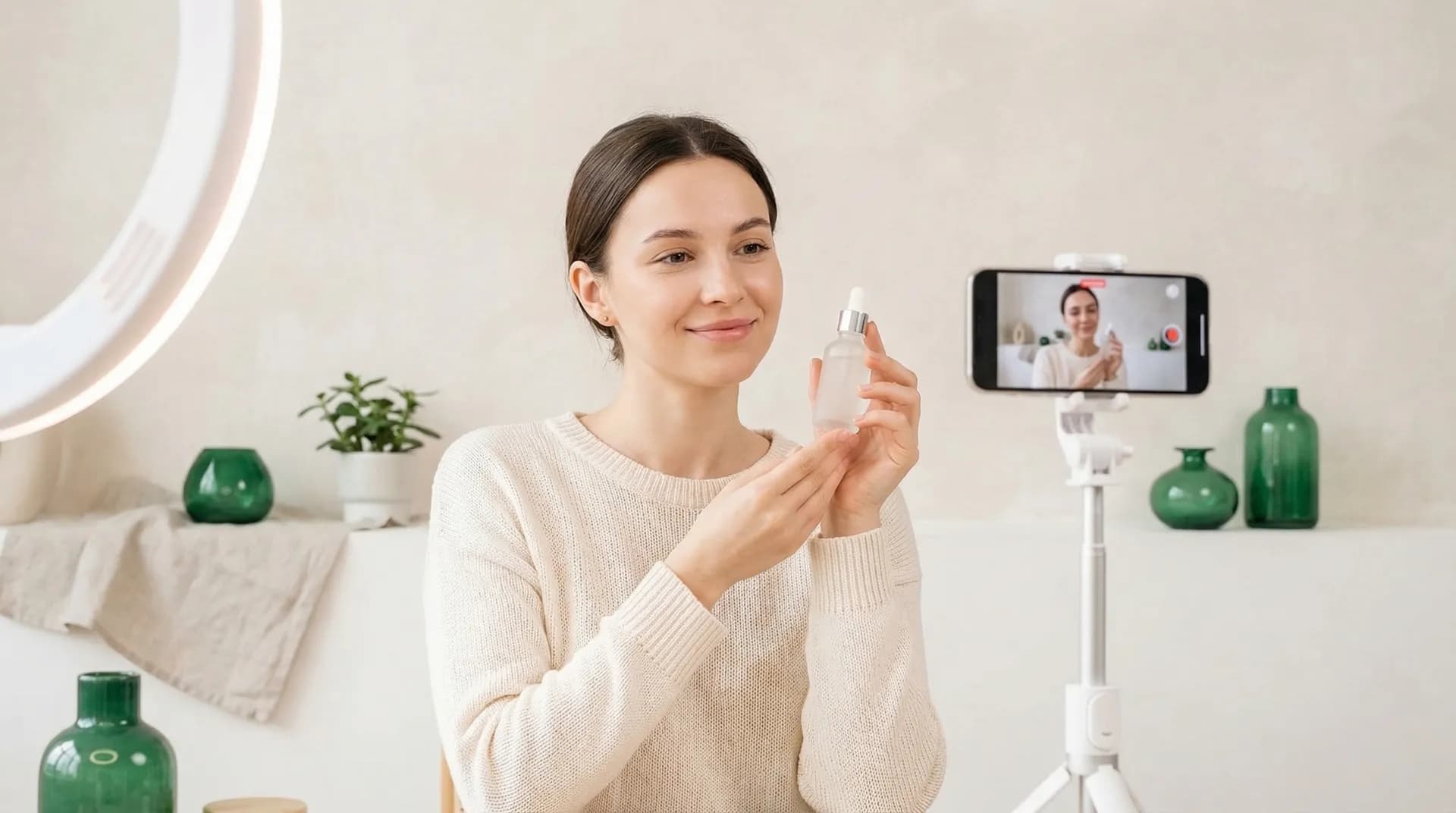
For UGC creators, spec work means filming a product video for a brand without being hired. You buy (or already own) the product, you write a script, you film it, you edit it — and it goes straight into your portfolio. Treated exactly like paid work.
Nobody asks for a contract number. Brands scanning portfolios care about one thing: can this person make content that converts? They're not running a background check on whether you got paid.
Once you've got your spec pieces together, our complete guide to building a UGC portfolio that wins brand deals covers how to structure and present everything into a portfolio that actually lands you campaigns. But first, you need the content.
Start with products you already own
Open your bathroom cabinet. Your kitchen counter. Your desk drawer. You're probably sitting next to $300–$500 worth of portfolio content right now and haven't touched it.
That skincare serum? Perfect for a product close-up and before/after video. Your morning coffee setup? A DTC coffee brand would pay for that content. The protein powder on your shelf, the candle on your windowsill, the sneakers by the door — all of it is fair game.
Start there. Don't go buy anything yet.
For each product, shoot these three formats:
- Unboxing or reveal — even if you've had it for months, treat it like day one
- Problem/solution — frame the product as the answer to a specific frustration you had
- Lifestyle — you genuinely using it in your real environment, not staged and stiff
Three formats × three products = nine pieces. That's a real portfolio.
The non-negotiables at this stage: fix your lighting first (a window or a $25 ring light does the job), stabilize your shot (phone + tripod, not handheld), and sort your audio before anything else. Bad audio tanks otherwise good content faster than any other problem. Our UGC audio guide covers the exact gear and setup to get this right without spending much.
Build mock campaigns for real brands
Once you've shot your own products, go further: pick 2–3 actual brands you love and create content for them as if they hired you.
Go to that brand's TikTok or Instagram. Study what their current UGC actually looks like — the hook style, the energy, the CTA, the editing pace. Then make your own version. Better, if you can.
Target brands with a clear, consistent aesthetic: Glossier, LMNT, Chamberlain Coffee, Liquid IV, Athletic Greens. These mid-size DTC brands have strong creative identities, which means you have something concrete to match against. Matching their visual vibe in your spec piece proves you can adapt to a brief — and that's one of the first things brand managers screen for. Research from Nosto shows that 79% of consumers say UGC heavily influences their purchase decisions, which is exactly why these brands are spending on creators in the first place.
Skip mega-brands like Apple or Nike. You'll look out of your depth, and they don't hire individual UGC creators anyway.
When you have a few mock pieces, study what polished spec work actually looks like in practice. The UGC portfolio examples that actually land brand deals is worth bookmarking here — seeing the gap between "I filmed something" and "this is portfolio-ready" is one of the fastest ways to close that gap yourself.
How many videos before you start pitching
Eight to twelve videos is the floor. Not because brands will count them, but because at that number you can show real range.
When a brand scrolls your portfolio, they're asking:
- Can they hook an audience in the first 2–3 seconds?
- Do they sound natural and unscripted?
- Can they show a product in a way that feels real, not promotional?
- Do they understand editing — pacing, cuts, captions, music?
You can't demonstrate all of that convincingly in two or three videos. Eight to twelve covers the bases. Fifteen starts to feel like padding.
Your set should include at least two different product categories (don't make everything skincare), at least two distinct video styles (talking-head testimonial alongside lifestyle/cinematic), and at least one strong problem/solution piece. That last format performs well for brands and signals that you think about the why behind the content, not just the execution.
For the presentation layer — how to actually build the document or page — the UGC portfolio template guide walks through the exact sections brands want to see and how to present spec work without it looking like a second-class citizen next to paid work. Because it shouldn't be.
Present spec work with confidence — no disclaimers
The biggest mistake I see from beginners isn't the content quality. It's the framing.
"Here's my portfolio, I'm just getting started so some of these are practice videos I made for fun…"
Stop. You just torpedoed your own pitch before they even clicked play.
Present spec work the same way you present paid work. Label it neutrally: Brand: Chamberlain Coffee / Spec / 2026. That's it. No apology, no explanation, no "I wasn't officially hired." If they ask, you say: "This is a spec piece I created for my portfolio." That answer reads as professional initiative, not dishonesty — and most brands won't even ask.
Where you host this matters too. A Google Drive link signals "I threw this together this morning." A clean portfolio page — even a simple free one — signals that you take this seriously. The best UGC portfolio website options breaks down free and paid platforms based on where you are in your creator journey. According to Later's research on creator profiles, presentation quality directly affects how seriously brands consider creator pitches, even when the underlying content is comparable.
When to leave spec work behind
Once you've landed two or three paid deals, replace your spec pieces with those.
No announcement needed. Just swap them out as you go. Your portfolio should always show your most recent and best work — and once real brand partnerships exist, they become the proof. The spec videos served their purpose: they got you in the door.
Hootsuite's annual social trends data consistently shows UGC outperforming brand-produced content on authenticity metrics, which means brands are actively looking for new creators to add to their rosters. That first deal is closer than it feels.
The goal of spec work was never to fake experience. It was to build skills and demonstrate capability before someone else gave you the green light. Most of the UGC creators I know who are now making $3,000–$5,000 a month built their first 10 pieces entirely on spec before landing a single paid brief.
Your first brand deal doesn't come from waiting for permission. It comes from having something worth showing.
Frequently Asked Questions
Can I include spec work in my UGC portfolio?
How many UGC videos do I need with no experience before pitching brands?
Do I need to buy products to make a UGC portfolio from scratch?
Will brands know my portfolio is spec work?
What equipment do I need to film UGC at home for a portfolio?
How do I get my first UGC brand deal with no experience?
Related reading
- How to build a UGC portfolio that wins brand deals
- UGC portfolio template: the exact sections brands want
- 15 UGC portfolio examples that actually land brand deals
- Best UGC portfolio website options (free & paid)
- How to land your first UGC campaign as a creator
- UGC video production: your complete beginner's guide