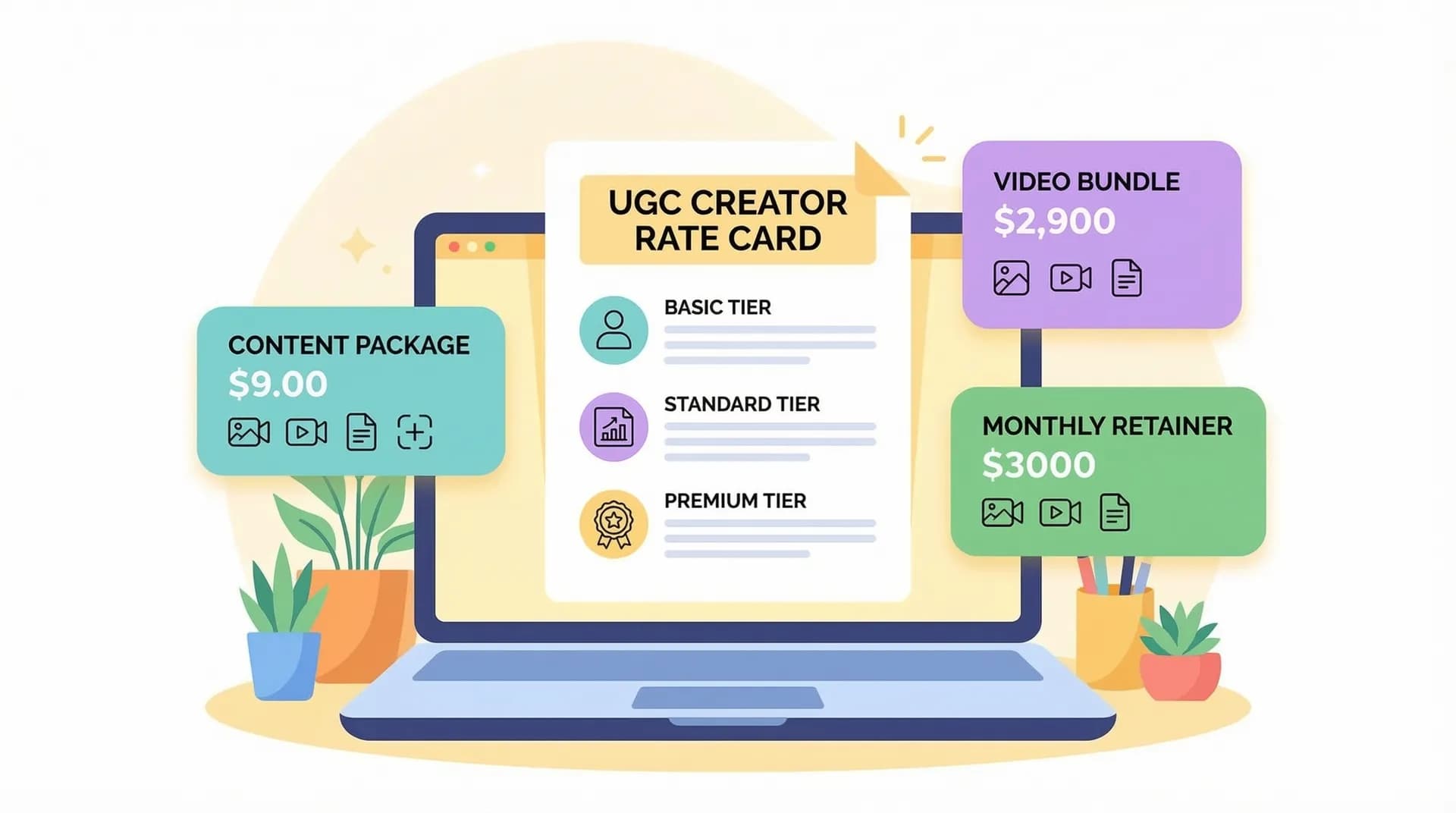
How to build a UGC rate card that wins brand deals
Step-by-step guide to building a UGC rate card with pricing tiers, deliverables, and the exact format brands want to see. Land more paid campaigns.

The first time I watched a creator lose a real deal, it had nothing to do with their content. Their videos were genuinely good. Their niche matched the brand perfectly. They lost it because when the brand manager asked "do you have a UGC rate card?" they said no — and after two days of scattered back-and-forth DMs, the brand went with someone else who had their act together.
A rate card is one of those things that looks optional until you realize it isn't. It anchors the price conversation before the brand sets the floor. It signals you run a real operation, not a side hustle. And it saves brand managers the friction of extracting your pricing one message at a time — which, trust me, they hate.
Here's exactly how to build one that closes deals.
What your UGC rate card actually needs to include
Most rate cards I see are either too vague (just a number, no context) or too cluttered (six packages nobody can parse). Neither works.
A good rate card has four core components.
Deliverables. What are you actually producing? Raw video files? Edited videos? Static images? Bundles? Be specific. "1 video" means nothing to a brand manager. "1 × 30-second vertical video, scripted and self-edited, delivered as .mp4 with open captions" means something they can brief against and approve.
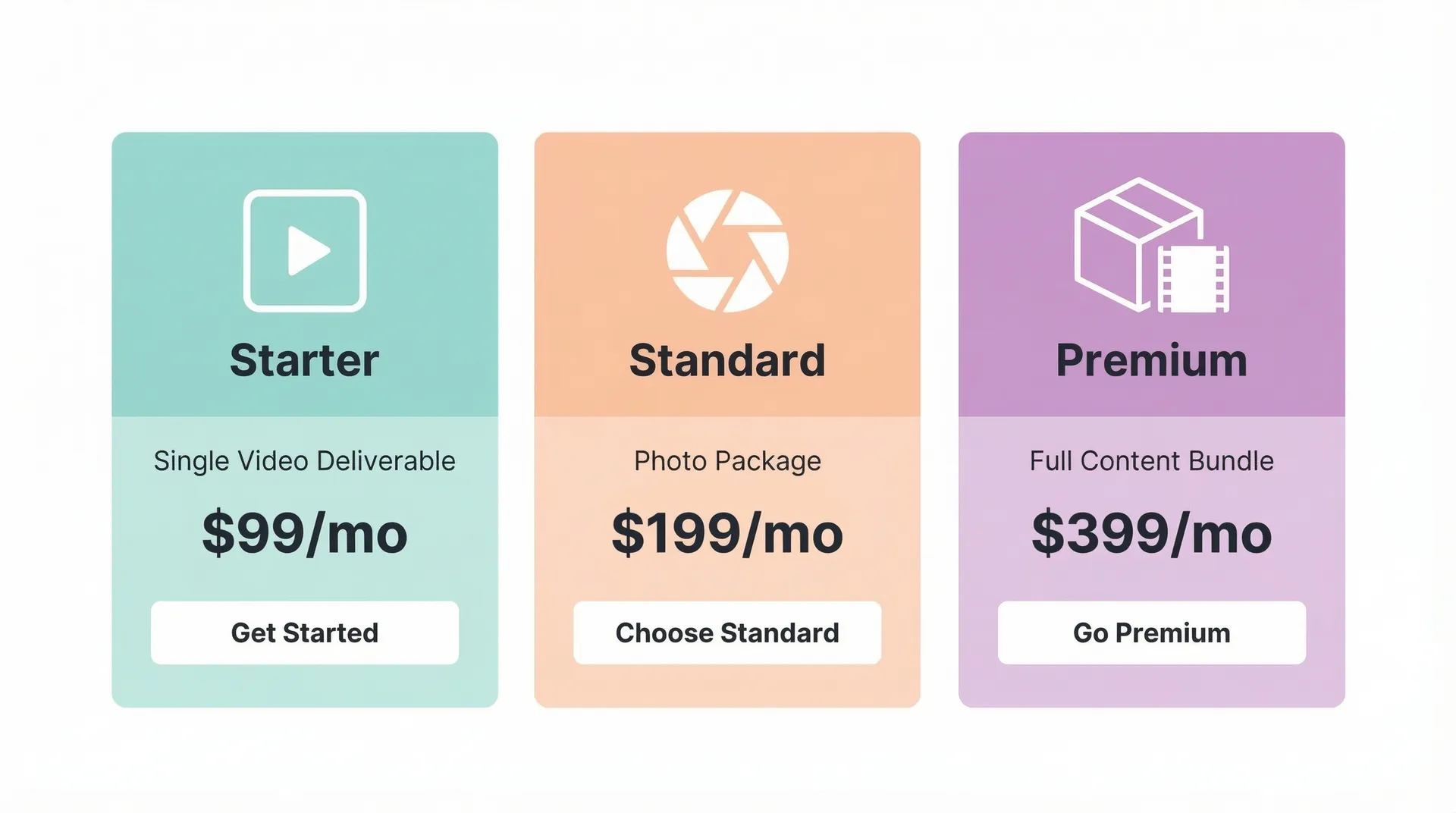
Pricing tiers. Two or three options maximum. Starter, Standard, and Premium is the structure that works. Name them in a way that signals value — not just price. A brand skimming five proposals in a row will remember "Premium Bundle" before they remember "$450."
Turnaround time. Campaigns have deadlines. If you don't list your delivery timeline, you'll get asked in every single pitch. Standard expectation is 5–7 business days from brief approval. Put it front and center.
Usage rights. This is the line item most new creators forget — and it's where the real money gets left on the table. Organic social usage and paid advertising usage are completely different things. Whitelisting is different again. Each one has a different value. If you don't list these separately, brands will assume everything's included. Some will just run your content as paid ads without asking.
One more optional-but-smart addition: a short "What I don't do" note. Listing that you don't provide voiceover, don't create content requiring permits or talent releases, or don't work in certain product categories (supplements, alcohol, etc.) saves you from misaligned briefs. Brands respect the clarity.
Keep it to one page. If they have to scroll through your rate card, it's already too long.
Building your pricing tiers
There's no single "right" rate for UGC — but there are real market ranges, and knowing them means you won't undersell or scare off legitimate buyers.
For the full breakdown by platform, experience level, and content type, our UGC creator salary & rates: what to charge in 2026 guide covers it all. Here's the shorthand you need for building your tiers:
Starter tier ($75–$150 per asset) One deliverable. Short-form video (15–30 seconds) or a set of 3–5 product photos. No paid usage rights included. This tier is for brands testing UGC on a small budget for the first time — it gets you in the door and gets you a review. Don't stay here long.
Standard tier ($150–$400 per asset) Your bread-and-butter package. One edited video (30–60 seconds) with a script, captions, and basic sound. Organic usage included for 30–90 days. Most brands actively shopping for UGC are looking in this range. This is where you build your income.
Premium tier ($400–$800+) A multi-format bundle — for example, a hero video plus two cut-downs plus three stills. Paid usage rights either included or available as an add-on. Brands running performance marketing campaigns at scale buy here.
At the bottom of your tiers, add a Usage Rights Add-On line. Something like: "+$150–$300/month for paid ad usage rights." According to Influencer Marketing Hub's UGC research, brands using UGC in paid ads see significantly higher conversion rates than with polished studio content — they know it's worth paying extra for. Charge accordingly.
Also include a bundle discount. If a brand wants 5 videos instead of 1, give them 10–15% off. It incentivizes volume and makes the buying decision easy.
The deliverables format that actually wins deals
The way you describe your deliverables matters as much as the deliverables themselves. Here's what brand managers actually need to see:
Format specs. Portrait or landscape, file format (.mp4, .mov), length in seconds, raw vs. edited, whether a hook and CTA are scripted in. Don't make them guess.
Platform fit. Say "TikTok-native vertical" or "Instagram Reels-optimized" or "multi-platform." Brands buy for specific placements — they need to know your output fits before they buy.
Revision policy. One round of revisions is standard. Two is generous. Put it in writing, or you'll spend a week going back and forth on minor copy tweaks. Being explicit protects both parties.
Exclusivity window. Some brands want category exclusivity — you won't create for a direct competitor for 30–60 days. That's a legitimate ask, but it comes at a cost. List it as a separate line item. Don't give it away for free.
If you're building your rate card in parallel with your portfolio, make sure both documents have the same tone and visual style. A polished PDF rate card next to a messy Google Doc portfolio kills your credibility instantly. Our guide on how to build a UGC portfolio that wins campaigns walks through exactly what samples to include and how to present them.
Rate card mistakes that kill your deals
I see the same four errors constantly.
Leading with your cheapest price. Start with your premium package — always. Anchor high and your standard tier looks like a deal. Anchor low and you've capped the entire conversation before it started. This single change can add hundreds of dollars to your average deal size.
No usage rights section. If a brand wants to run your content as a paid ad and you have no usage fee listed, they'll assume it's included. Some will just run it. This is an industry-wide problem. Spell it out in plain language.
No bundle pricing. A rate card with only single-asset pricing is leaving volume deals on the floor. Brands running real campaigns need multiple pieces of content. Give them a reason to buy everything from you.
No expiry date. Rates go up. Your skills improve. Demand changes. Add "Rates valid through [date]" at the bottom. It creates soft urgency and gives you a clean reason to send an updated version every quarter without it feeling awkward. It also subtly signals that your time is in demand.
The TikTok Creator Marketplace uses structured deliverable formats for a reason — brands have been trained to expect clear, organized proposals. Match that expectation and you'll immediately stand out from the half-page Google Doc most creators send.
How to actually send your rate card
Don't wait to be asked for it.
When you're pitching a brand — cold outreach or responding to an inquiry — include your rate card in the first message. Not at the end. Not "available on request." First message, as a PDF attachment or a clean Canva/Notion link.
Something like: "Hey [Name], I'd love to create for [Brand]. I've attached my current rate card — happy to talk through what fits your campaign."
That's it. No apologizing for your rates. No lengthy justification. You're a professional with a price list, not someone asking for a favor. That framing matters.
If you're still working out how to find and approach the right brands in the first place, how to land your first UGC campaign covers the outreach side in full detail.
Update your rate card every time you genuinely level up — better equipment, a new platform skill, measurable performance data from previous campaigns. Later's research on UGC creator rates shows the creator market continues to mature and brand budgets with it. Your pricing should reflect that trajectory, not lag behind it.
Frequently Asked Questions
What should I charge as a beginner UGC creator?
Should I include usage rights on my UGC rate card?
How many pricing tiers should a UGC rate card have?
What format should I use for my UGC rate card?
How often should I update my UGC rate card?
Do I need a rate card before landing my first brand deal?
Related reading
- UGC creator salary & rates: what to charge in 2026 — the complete breakdown of market rates by platform, experience level, and content type
- How to build a UGC portfolio that wins campaigns — what samples to include alongside your rate card when pitching brands
- How to land your first UGC campaign as a creator — outreach strategy and pitch frameworks to get in front of the right brands